


Stakeholders Back Bill to Compel Social Media Firms to Open Offices in Nigeria
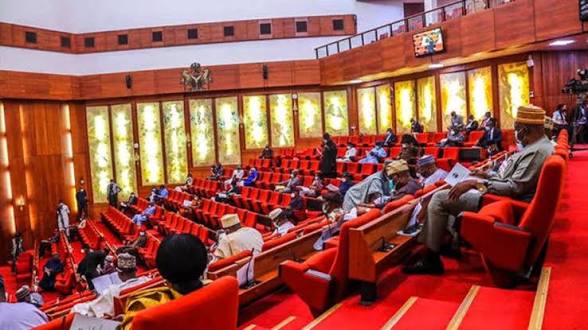
Stakeholders have thrown their weight behind a bill seeking to compel social media platforms operating in Nigeria to establish physical offices in the country, describing the proposal as a step towards strengthening regulation, accountability and the digital economy.
Support for the bill was expressed on Thursday during a public hearing organised by the Senate Committee on ICT and Cyber Security, where participants also endorsed a separate bill proposing the establishment of an Artificial Intelligence Academy in Omuo-Ekiti, Ekiti State.
The social media bill, sponsored by Senator Ned Nwoko (APC, Delta North), seeks to amend the Nigeria Data Protection Act, 2023, by making it mandatory for social media platforms, data controllers and data processors operating in Nigeria to maintain functional offices within the country.
The second bill, sponsored by Senator Yemi Adaramodu (APC, Ekiti South), proposes the establishment of an Artificial Intelligence Academy to serve as a centre for AI education, research and innovation.
Chairman of the Senate Committee on ICT and Cyber Security, Senator Shuaib Afolabi Salisu (APC, Ogun Central), said the proposed legislation would strengthen Nigeria’s digital ecosystem, while the AI Academy would promote excellence in artificial intelligence research and capacity development.
Declaring the public hearing open, Senate President Godswill Akpabio, represented by Deputy Senate Leader Senator Lola Ashiru (APC, Kwara South), described both bills as forward-looking initiatives aimed at advancing governance and technological development.
Akpabio said the requirement for social media companies to establish offices in Nigeria was not intended to hinder their operations but to improve engagement with regulators, users and other stakeholders.
Speaking during the hearing, Nwoko said the bill was designed to encourage global technology companies to become more accountable and contribute directly to Nigeria’s economy rather than discourage investment.
He argued that countries such as the United Kingdom, India, Singapore, Brazil, South Africa and Japan have benefited from hosting local offices of major technology companies through increased employment, technology transfer, improved regulatory compliance and greater investment.
According to the senator, Nigeria, as Africa’s largest digital market, should also enjoy similar advantages.
He said the proposed legislation would improve national security by providing direct channels of engagement between technology firms and Nigerian authorities, strengthen enforcement of data protection laws, enhance consumer protection, improve tax compliance and create employment opportunities for Nigerians.
Nwoko added that the bill would also encourage collaboration between multinational technology companies and Nigerian professionals, startups and educational institutions to facilitate technology transfer and innovation.
He noted that the legislation, which passed second reading in March, was introduced in response to the absence of physical offices of major social media companies—including Facebook, Instagram, WhatsApp, X, YouTube, TikTok and Snapchat—despite their large user base and business activities in Nigeria.
The senator added that the bill also contains provisions affecting bloggers, with the aim of promoting professionalism, transparency and greater accountability in Nigeria’s digital media space.