
Sign Abraham Accords, Get Nuclear Deal- Trump tells Saudi Arabia
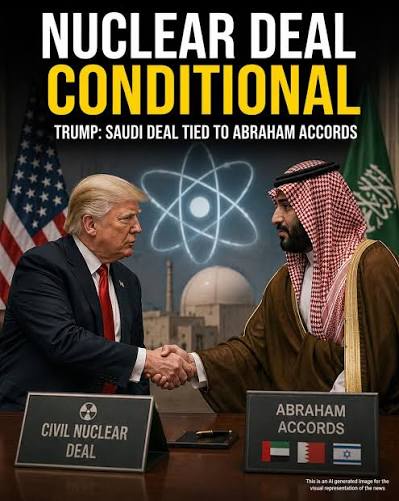
Recent diplomatic developments surrounding potential U.S. incentives including civilian nuclear cooperation have reignited discussions about encouraging Saudi Arabia to normalize relations with Israel.
These efforts tie directly into the broader framework known as the Abraham Accords, making it vital to understand what these diplomatic agreements entail, who has signed them, and why they remain central to Middle Eastern foreign policy.
Initiated in 2020 during the first administration of U.S. President, Donald Trump and led by advisor Jared Kushner, the Abraham Accords are diplomatic treaties aimed at establishing full diplomatic and economic normalization between Israel and several regional nations. The United Arab Emirates and Bahrain were the first Arab states to formally sign on, codifying and expanding ties that had previously existed largely behind closed doors. Sudan and Morocco followed with their own normalization agreements shortly thereafter, while other regions and nations, including Kazakhstan and Somaliland, have joined the expanding framework in subsequent years.
The overarching vision promoted by Washington behind the accords was to foster Middle East stability through economic integration and security partnerships. However, the framework has drawn significant criticism for bypassing the core conflict between Israel and Palestine. Opponents point out that the strategy attempts to normalize relations across the region without requiring Israel to resolve major ongoing issues, particularly regarding the occupation of historic Palestine.
While Israeli Prime Minister, Benjamin Netanyahu has consistently praised the accords as a monumental breakthrough toward regional stability, critical voices question the scope of that peace given widespread military action and conflict across Gaza, the West Bank, Lebanon, Syria, and Yemen. A major missing piece in the framework remains Saudi Arabia. As one of the most influential powers in the Arab world, Saudi involvement is viewed by Israeli leadership as a historic leap forward, yet Riyadh’s leadership has consistently maintained that formal recognition remains contingent on addressing Palestinian statehood and managing deep regional security tensions.