

Tinubu Reforms: Correlation Between Nigerians and Israelites
God saw the suffering of the children of Isreal and came to their aid, God had to perform about 10 different miracles in Egypt to show them that he is their savior. The judgments began by devastating the environment, turning the Nile River into blood and triggering overwhelming infestations of frogs, gnats, and flies. The affliction then turned toward Egypt’s resources and physical health, wiping out their livestock with disease and covering the population in painful, festering boils. Next, the land’s agriculture was completely ruined by a catastrophic storm of fire-infused hail, followed closely by a swarm of locusts that consumed all remaining vegetation. Finally, after a terrifying three-day period of total, palpable darkness, the ultimate judgment struck: the death of every Egyptian firstborn child and animal. This final loss, which included Pharaoh’s own son, finally broke the ruler’s resolve and forced him to release the Israelites.
This brings us to Nigeria. Before assuming office, Tinubu knew exactly what he was walking into. ASUU strikes routinely turned four-year courses into six to eight-year ordeals. Almost no state could afford to pay its workers, with backlogs stretching seven, eight, or even twelve months with the rare exceptions of Lagos and Rivers states. The country was trapped in a cycle of borrowing to pay salaries, borrowing for consumption, and borrowing to subsidize foreign exchange and fuel.
Even mass unemployment and poverty are deep-rooted historical issues. Consider the four-decade-old video of Gani Fawehinmi protesting and crying out that “even the beans and bananas the poor man could once afford are no longer affordable.” Similarly, queuing for hours at petrol stations has been a recurring Nigerian frustration for generations.
I have my own personal experience with this. Back in my SS1 days, I actually led a student protest after my classmates and I were chased out of school because our parents couldn’t pay our fees simply because the government hadn’t paid their salaries. Insecurity isn’t a recent invention either; it has plagued the country for ages through money rituals, ritual killings, farmer-herder clashes, IPOB, Boko Haram, and rampant kidnapping.
Yet, many of these chronic issues have begun to dissolve since Tinubu assumed office. His very first move was removing the fuel subsidy, which effectively banished the endless queues from our filling stations and halted systemic fuel scarcity.
He put an end to borrowing for non-yielding consumption, and his administration has notably refused to borrow money just to pay salaries.
Despite this, some Nigerians claim they prefer “the Nigeria of yesterday.” The Yorubas have a saying: “Tita ríro lá n kọlà, tó bá jinná tán, á di ọ̀gẹ́” (It is with pain and burning that we carve tribal marks; when they heal completely, they become a thing of beauty). We have to endure this transitional phase because nothing truly great is achieved without passing through hardship first.
In fact, this administration has earned high praise from both its major critics and international institutions like S&P, as Nigeria’s economy successfully climbed back to overtake major African nations like Morocco and Kenya.
The economy is working, as George said in an interview that “if care is not taken, what is going to happen 10 years to come in Nigeria is what is happening in south Africa where citizen are blaming foreigners for their worse condition because they wasted their time blaming the apartheid government” he emphases that the youth are spending too much time listen to the opposition party that the economy is not working, which is not true, investors are rushing in masses.
Today, the two main choruses of complaint among Nigerians are insecurity and the question of when these reforms will finally trickle down to the common man. But total perfection is impossible. Even Jesus noted that “the poor you will always have with you,” acknowledging that poverty is an age-old human struggle.
To cushion the impact of the subsidy removal, Tinubu has deployed aggressive social safety nets. Initiatives like NELFUND and TVET programs ensure our children can access higher education and vocational skills without forcing their parents to break the bank. He has also rolled out CNG-powered buses to protect the masses from skyrocketing transportation costs.
No previous Nigerian president has boosted the economic framework as Tinubu has, nor has any administration tackled insecurity with this level of systemic reform. The state policing initiative which previous administrations failed to implement is now in its final stages. We are also witnessing true local government autonomy and the strategic decentralization of military training facilities across all geopolitical zones. Even the post-civil war promises made to the Southeast, neglected for decades, are finally being fulfilled under his watch.
For decades, electricity has been the devil of Nigeria’s economic development. Successive administrations have promised literal and figurative enlightenment, only to leave the grid trapped in a cycle of system collapses and deep financial deficits.
However, a profound and structural shift is currently underway. Through a combination of radical legislative decentralization and aggressive debt clearing, the current administration is quietly laying the groundwork to make systemic blackouts a relic of the past.
The primary bottleneck of the Nigerian power sector has historically been its hyper-centralized structure. Power generation, transmission, and regulation were heavily tied to the exclusive list, leaving states legally powerless to independently solve their energy crises. This game changed entirely with the signing of the constitutional amendment that decentralized the power sector. By moving electricity from the Exclusive Legislative List to the Concurrent Legislative List, the federal government effectively broke the monopoly.
Under this new framework, states and local governments possess the legal authority to generate, transmit, and distribute electricity within their borders. Forward-thinking states like Lagos, Abia, Enugu, and Imo have already seized this opportunity, creating localized frameworks to attract private investors and build independent mini-grids. In the coming months, this regional autonomy is expected to yield highly visible improvements, slowly detaching local economies from the vulnerabilities of the national grid.
Of course, you cannot fix the flow of electrons without first fixing the flow of cash. The Nigerian power sector has long been choked by a massive liquidity crisis, accumulating a staggering debt profile exceeding 4 trillion Naira. This debt-clogged system effectively starved the sector of fresh capital, as legacy debts made the industry a high-risk gamble for international investors.
To dismantle this financial roadblock, President Bola Tinubu established a dedicated presidential committee on electricity. The strategic roadmap centers on financial engineering, specifically using targeted bond issuances to systematically clear this multi-trillion Naira debt. By injecting liquidity and clearing these books, the administration is restoring confidence to the value chain and sending a strong signal to global markets that the Nigerian energy market is once again bankable.
Following the privatization of the sector over a decade ago, many of the private entities that acquired distribution and generation assets lacked the financial muscle and technical capacity to expand or modernize the infrastructure. As a result, Nigeria was left with a weak, deteriorating network unable to withstand modern capacity demands.
With the federal government now aggressively intervening to address the debt crisis and open up regional markets, a comprehensive refurbishment plan is finally possible. The infusion of fresh capital from state-level partnerships and newly structured bonds will allow for the revitalization of substations, upgrading of transformers, and expansion of transmission lines. The chronic power shortages that have stifled Nigerian businesses for a generation are finally being met with structural, long-term remedies.
While infrastructure cannot be rebuilt overnight, the combination of legal freedom for the states and a clean financial slate means that a stable, electrified future is actively being built.
As I have written in previous formal articles, the best way to solve insecurity is to tackle it from the grassroots, and that is exactly what Tinubu is achieving through state policing. Localized policing directly addresses the core flaws of our current centralized system: it eliminates the lack of passion, lack of dedication, and lack of commitment, while shutting down political and financial sabotage. Unfortunately, many Nigerians have short memories.
Only those with a keen sense of observation and a mind devoid of bias can see that the country is moving in a positive direction across all fronts.
This is precisely where the comparison between the Israelites and Nigerians becomes so relevant. Just as the Israelites chose to yearn for Egypt forgetting God’s deliverance and willingly offering to return to a place where they were maltreated, enslaved, and stripped of their basic rights many Nigerians today are expressing a preference for the past.
They look back fondly on former days that were actually defined by relentless ASUU strikes, state governments unable to pay basic salaries, and absurd corruption where public funds meant for a road that can swallow a whole Toyota Hilux. They are nostalgic for days plagued by a mere four hours of power supply a day and a complete lack of local government autonomy.
The endurance of those few early Israelites laid the foundation for the prosperity of modern-day Israel a nation now globally renowned for its formidable military and thriving economy. That is the exact destination Tinubu is steering Nigeria toward. Consider this: for more than 35 years, no sitting Nigerian president had visited the UK specifically to discuss the strategic progress of Nigeria until Tinubu took office.
True global respect only comes when your economy grows, which is why Tinubu is aggressively investing in the nation’s economic bedrock; once that foundation is solid, the smaller issues will naturally fall into place.
Nigerians must not lose hope. We must not be like the rebellious generation of Israelites who failed to reach the Promised Land. There are many minor challenges we can resolve within our own communities without always waiting for the government. And when a situation does exceed your personal capacity, forward it to the BAT-IG that is what we do.
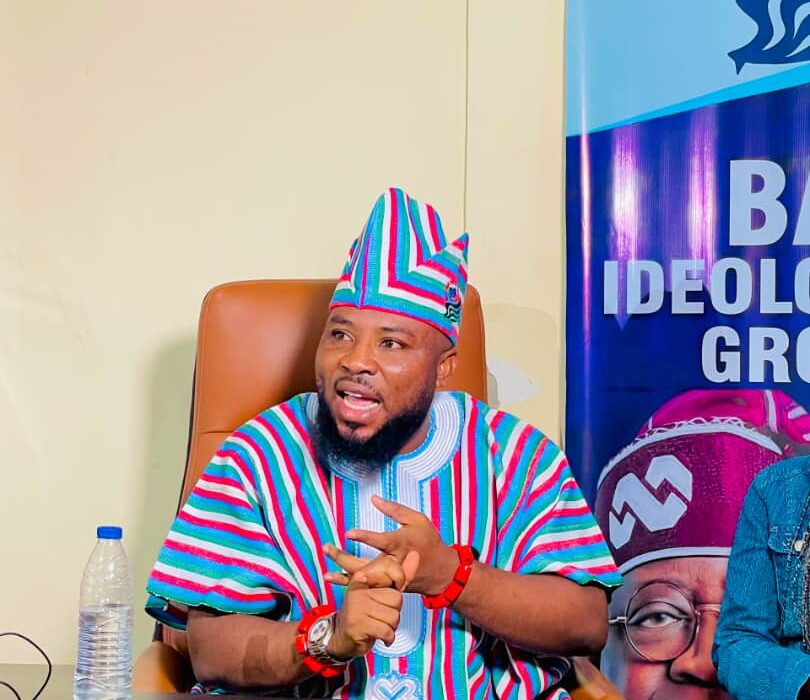
Bamidele Atoyebi is the Convener of BAT Ideological Group, National Coordinator of Accountability and Policy Monitoring and a publisher at Unfiltered and Mining Reporting and political social worker