


Zimbabwe Falls Back on Precious Metals, Critical Minerals to Cushion from US war
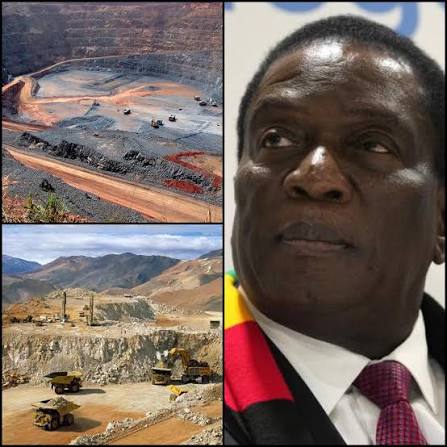
Zimbabwe intends to leverage its projected mineral export revenue, estimated at $6.5-$7 billion for the current fiscal period, as a strategic buffer against economic instability stemming from geopolitical tensions between the United States and Iran.
The conflict, which has driven oil prices via the blockade of the Strait of Hormuz, a critical shipping route, has had a massive economic effect in Africa. While some countries on the continent have been deeply affected, others are mitigating the impact effectively.
Zimbabwe expects to find itself in the pool of countries managing the effects of the war efficiently by maximising production in its mining sector. Per some of the country’s administrators, surging prices of gold, improving prospects for platinum group metals (PGMs), and more lithium exploitation are key to a strong fiscal performance this year amidst global economic shocks.
As seen on Bulawayo24, mining continues to be one of Zimbabwe’s most significant economic sectors, making up a sizeable portion of export revenue and contributing between 13 and 15 percent of the country’s GDP.
Dr. Polite Kambamura, the Minister of Mines and Mining Development, informed Business Times that the sector is expected to undergo more accelerated growth during the latter half of the year.
“In the first half of the year, we had about US$2 billion in revenue inflows to the fiscus. Going forward, we are looking at around US$6.5 billion to US$7 billion in export receipts,” the minister stated.
“We expect this to be anchored by minerals such as gold. World market prices for gold are continuing to firm up. PGM prices are also recovering, and the emergence of lithium sulphate products is a feather in our cap in terms of improving revenue for the Government,” he continued.
The Mines Minister also referenced the Arcadia Lithium Mine in Goromonzi, which he mentioned is close to kick-starting production of lithium carbonate, a more valuable commodity utilised in energy storage technology and battery production.
Additionally, Dr. Kambamura identified corruption as a significant impediment to production and called upon officials to eradicate such practices.
“All miners should be treated the same, no matter where they come from. I want ministry officials to serve the grandfather from Kadoma in the same manner they serve influential people. We are here to serve the people of Zimbabwe without fear or favour,” he said.
“I want the Ministry of Mines and Mining Development to be recognised as the best-performing ministry in government, measured not by our words but by our results,” he added.
Zimbabwe has also embarked on a campaign to gain more control of its lithium by banning the export of lithium concentrates, a move expected to increase Zimbabwe’s autonomy within the global value chain.
In February, Zimbabwe’s mines ministry announced the immediate and indefinite suspension of the exportation of all raw minerals and lithium concentrates.
“Government expects cooperation of the mining industry on this measure, which has been taken in the national interest,” the statement read.
“Government remains committed to … in-country value addition and beneficiation, compliance, and accountability in the exportation of Zimbabwe’s mineral resources,” it added.
The Mines Ministry announced that it will realign export procedures due to “continued malpractices during the exportation of minerals” in the statement.
“This review is part of a broader effort to curb leakages and enhance efficiency within our systems,” the ministry wrote.
By March, Polite Kambamura reinforced a similar rationale, claiming that under-declaration by miners was an issue too serious to ignore. He stated that the problem had gotten so widespread that the government was obliged to push its disciplinary timeframe a year back. The administration had planned to begin the expiry ban on lithium concentrates by 2027, but sped up the decision due to increased output and excess export permits.