

1999 Constitution Was Not Written by Military, Mostly Derived From 1979 Charter, Claims Abdulsalami
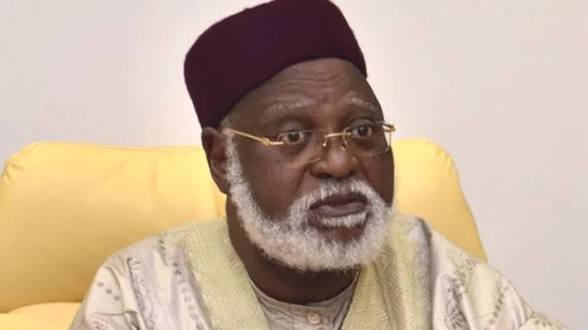
Former Head of State, Gen. Abdulsalami Abubakar (retd.) has rejected the claim that Nigeria’s 1999 Constitution was authored by the military, saying the document was largely drawn from the 1979 Constitution prepared by civilian legal experts.
In his autobiography, Call of Duty, Abdulsalami said about 95 per cent of the 1999 Constitution came from the 1979 Constitution, while some additional provisions were taken from the 1995 draft produced during the late Gen. Sani Abacha’s regime.
He said the 1979 document had been drafted by a committee of civilian experts and not by soldiers.
Abdulsalami explained that after assuming office in June 1998, he established a 25-member Constitution Debate Co-ordinating Committee chaired by Justice Niki Tobi, with Dr Suleiman Kumo as deputy chairman, to organise public discussions on the 1995 draft constitution.
He said the committee was never assigned to produce a fresh constitution, contrary to claims made over the years.
According to him, the committee gathered 405 memoranda from groups across the country, including ethnic, cultural and regional organisations, and also received input from Nigerians in the diaspora, including participants at a forum in Washington, D.C. He said the outcome showed broad rejection of the 1995 draft and overwhelming support for a return to the 1979 Constitution with amendments.
Quoting the committee’s findings, Abdulsalami said Nigerians across different constituencies preferred the 1979 Constitution, with relevant changes drawn from the 1995 draft. He said that recommendation became the basis for the eventual adoption of the 1999 Constitution.
He added that the proposal came as a relief because adopting the 1995 draft in full would likely have triggered opposition, especially from the Afenifere/NADECO bloc, and could have deepened political tensions during the transition to civil rule. He said using the 1979 Constitution offered a quicker and more broadly acceptable path out of the crisis facing the country at the time.
Addressing the history of the 1979 Constitution, Abdulsalami said it originated from a Constitutional Drafting Committee set up in 1975 under Gen. Murtala Muhammed. He said the body was chaired by Chief FRA Williams and initially had 50 members, but became 49 after Chief Obafemi Awolowo declined nomination on ethical grounds because of his political plans.
He said the draft produced by that committee was later reviewed clause by clause by a 230-member Constituent Assembly led by Justice Udo Udoma in 1977 under the Gen. Olusegun Obasanjo administration. Of those members, he said only 20 were appointed by the military government and none was a serving soldier or military officer, while the rest were elected through a representation formula based on population, states and local councils.
Abdulsalami also dismissed criticisms that the 1999 Constitution was invalid because it retained the Land Use Act and the National Youth Service Corps Act, both products of military rule. He said their inclusion did not undermine the rest of the constitution and argued that such criticism was being used unfairly to discredit the entire document.
He further rejected arguments that the constitution lacked legitimacy because it was not subjected to a referendum, saying no previous Nigerian constitution, including the 1979 Constitution often praised by critics, had been approved that way.
The former military ruler said he signed Decree No. 24 of 1999 on May 5, 1999, bringing the constitution into force on May 29 of that year. He noted that the document preserved the presidential and federal structure of the Second Republic and introduced the 13 per cent derivation formula for mineral-producing states as part of efforts to address neglect in the Niger Delta.
He maintained that no constitution is flawless, describing constitutions as living documents open to amendment. He noted that even Nigeria’s 1999 Constitution has already been amended several times.