

Why Bola Ahmed Tinubu is a Democratic Socialist, Not Core Capitalist
The political ideology of Nigeria’s President, Bola Ahmed Tinubu, has been a subject of controversy among political scientists, analysts, and social commentators. A large section of the public often mislabels his administration as purely capitalist, primarily due to major macroeconomic reforms such as the removal of the fuel subsidy and the unification of the foreign exchange market. However, an erudite examination of his policies, governance philosophy, and tracking history reveals a different reality. I see Tinubu as an advanced democratic socialist rather than a core capitalist.
To understand this dynamic, we must explore the scholarly arguments that define these economic systems, how they contrast, and why President Tinubu’s governance aligns robustly with democratic socialism.
Political scientists define the divide between capitalism and democratic socialism through the prism of resource management and the role the government plays in the welfare of its citizens.
A core capitalist system believes in a completely free, unregulated market where the forces of supply and demand dictate economic outcomes with zero government intervention. This approach relies heavily on the belief that as the economy grows, prosperity will naturally reach the poor. It prioritizes the privatization of essential infrastructure, treating services like healthcare and education as market commodities.
Conversely, a democratic socialist system acknowledges the efficiency of market forces but insists the state must actively intervene to prevent monopolies and protect the vulnerable. It rejects trickle-down economics in favor of aggressive, state-driven welfare programs to support the masses directly. In this view, education, health, and housing are treated as fundamental social rights that the state must provide.
Many self-acclaimed democratic socialist governments across the globe struggle to implement tangible welfare safety nets. In contrast, President Tinubu’s administration is executing an advanced model of democratic socialism by aggressively prioritizing institutionalized social welfare. Recent executive actions and policy frameworks demonstrate this commitment across multiple critical sectors.
In mass housing and infrastructure, a core pillar of democratic socialism is ensuring decent housing for the working class. True to his manifesto, the Tinubu administration has kicked off massive housing interventions, with plans to deliver over 100,000 housing units across the nation. Just recently, the administration advanced the delivery of over 20,000 units, proving that the state is actively taking responsibility for affordable shelter rather than leaving it to exploitative private real estate markets.
The administration’s welfare package heavily targets youth and human capital development through a revolution in education and healthcare. By providing interest-free loans to tertiary institution students, the Student Loan Scheme (NELFUND) ensures that higher education is not a luxury reserved only for the wealthy. This historic shift in welfare extends to lecturers and academic staff, ensuring that the driving forces behind public education are supported with specialized loan facilities. Following the legacy of legendary democratic socialists like Chief Obafemi Awolowo, the administration maintains a strong focus on subsidized healthcare and free basic education for vulnerable demographics up to the age of 18.
A capitalist mindset treats Labour as a cost to be minimized, but Tinubu’s policies treat workers as human beings deserving of dignity. This is evident in the civil service and security personnel welfare reforms. The administration has consistently pushed for the upward review of civil servants’ salaries to match current economic realities. It has also overhauled the welfare of front-line security personnel. Monthly allowances that previously hovered around 20,000 naira have been upgraded to 50,000 naira. Furthermore, the government is actively renovating dilapidated barracks and building modern two-bedroom housing units for security personnel, ensuring they have decent homes while serving the nation.
A classic critique of Tinubu’s policies points to his aggressive stance on taxation. However, his approach to taxation is the very engine that drives democratic socialism.
Historically, democratic socialists have argued that a state cannot fund public welfare without robust, progressive taxation. A famous historical debate highlights this reality: when analysts suggested removing women from the tax net and reducing taxes across the board to alleviate poverty, ideological leaders like Awolowo countered that the goal is not to eliminate taxes, but to ensure that tax revenue is collected efficiently and used judiciously. I believe that you cannot fund government and public welfare without collecting taxes. The key lies in progressive taxation taxing the rich appropriately to provide cushion for the poor.
President Tinubu has perfectly mirrored this philosophy. His tax reform bills are designed to eliminate multiple taxations that choke small businesses while pulling the poorest Nigerians out of the tax net entirely. By expanding the tax base at the top and deploying technology, the government generates the necessary revenue to fund the student loans, minimum wage increases, and infrastructure projects that alleviate poverty.
A true capitalist leader would never engage in distributing 75,000 conditional cash transfers directly to citizens, as the system expects individuals to rely entirely on market-driven wages. Similarly, such a leader would not subsidize critical healthcare treatments like dialysis, opting instead to let private medical providers dictate pricing. This non-interventionist stance also extends to public infrastructure; a capitalist governance model would not aggressively pour public funds into ward-level welfare projects like schools, roads, and hospitals, which are typically outsourced to private entities that choke the public with exorbitant fees. Furthermore, a capitalist framework would completely reject pumping massive financial resources into state and local governments to drive community-focused, grassroots development.
Even the institutional welfare under this leadership opposes the capitalist. A standard capitalist leader would not aggressively fund military welfare to the point of flying transferred personnel to their destination of deployments when that was never the practice before, nor would they take the personal step of donating their entire official salary to support the well-being of military families.
The misconception that Tinubu is a hardcore capitalist stem from his insistence on economic realism. He firmly believes that you cannot distribute wealth that you have not created. A country that subsidizes consumption to the point of bankruptcy will eventually slide into financial ruin, leaving the poor worse off.
By removing unsustainable subsidies (like the fuel subsidy) and allowing market forces to determine realistic pricing, he has stabilized the economy and plugged systemic leakages. Crucially, however, he did not stop there. He redirected those recovered funds directly into measurable, trackable public welfare programs such as the massive electricity subsidies that remain in place to protect local productivity.
Allowing market competition to drive economic growth while using state power to aggressively protect, house, educate, and finance the less privileged is the textbook definition of democratic socialism. President Bola Ahmed Tinubu is proving that economic pragmatism and deep social empathy can coexist, establishing a modern, advanced democratic socialist framework for Nigeria’s future.
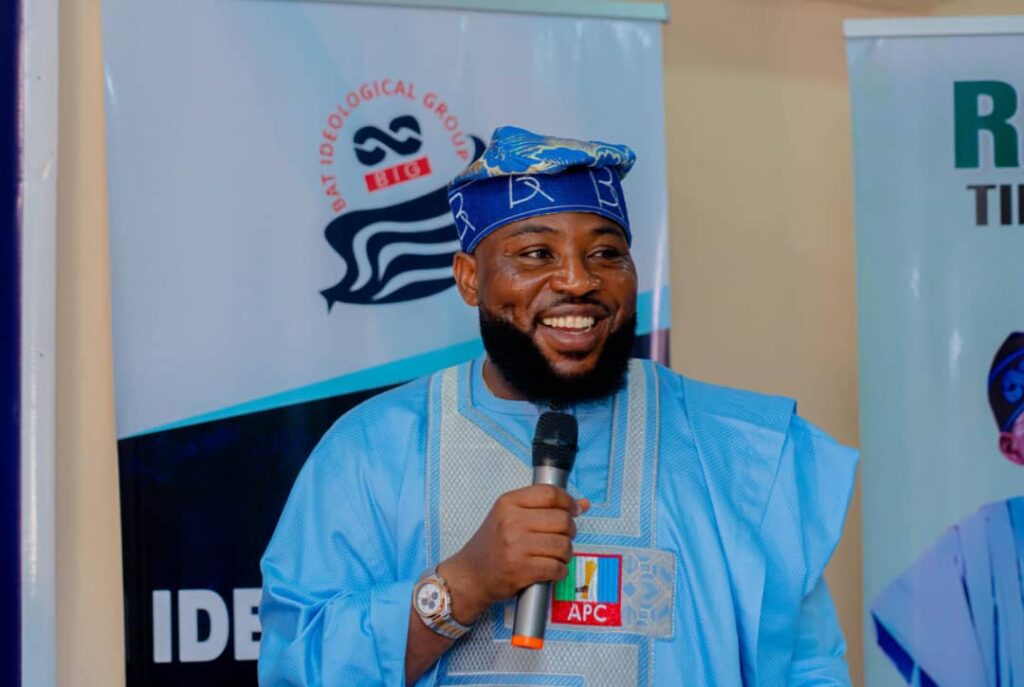
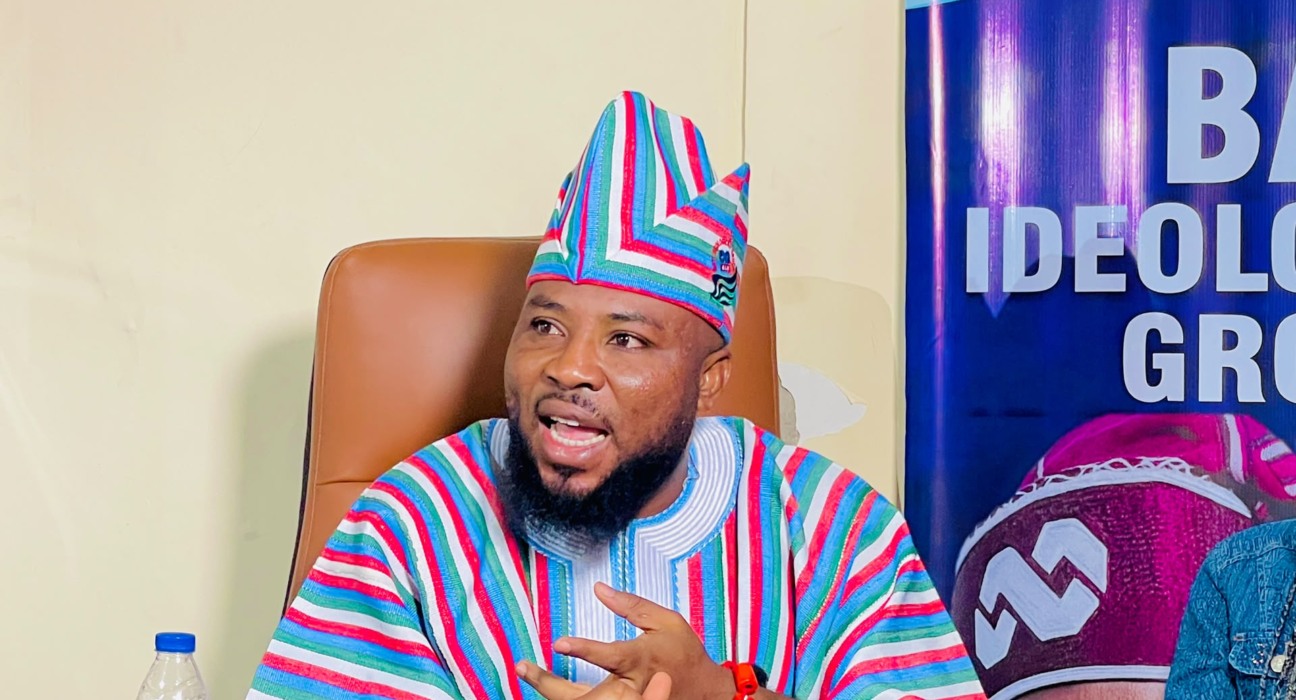
Bamidele Atoyebi is the Convener of BAT Ideological Group, National Coordinator of Accountability and Policy Monitoring and a publisher at Unfiltered and Mining Reporting and political social worker