
Tinubu Effectively Fighting Corruption, Says Atoyebi
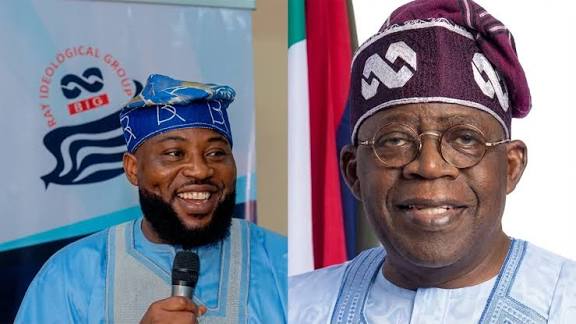
President Bola Tinubu’s decision to remove fuel subsidy and liberalise the foreign exchange market was aimed at effectively sealing long-standing financial leakages that enriched a privileged few while impoverishing the country, Convener of the Bola Ahmed Tinubu Ideological Group, Bamidele Atoyebi, has said.
Atoyebi, while defending the administration’s economic reforms, argued that the fuel subsidy and multiple exchange rate regimes had for decades served as conduits for “legalised looting,” allowing politically connected individuals to divert public resources on a massive scale.
He said successive administrations spent trillions of naira sustaining fuel subsidies, beginning from the administration of former President Olusegun Obasanjo, which reportedly spent about ₦300 billion annually between 1999 and 2007.
He stated that subsidy payments rose sharply under late President Umaru Musa Yar’Adua, with about ₦1.37 trillion spent between 2007 and 2009, while the administration of former President Goodluck Jonathan spent approximately ₦6.68 trillion between 2010 and 2014 amid widespread controversies and the 2012 Occupy Nigeria protests.
Atoyebi added that subsidy expenditure continued to skyrocket during former President Muhammadu Buhari’s administration, with about ₦7.95 trillion reportedly spent between 2015 and 2022, including nearly ₦4 trillion in 2022 alone.
“The most effective way to steal from the public is through a system so opaque that ordinary citizens cannot trace where the money goes,” Atoyebi said.
He likened the fuel subsidy regime to a fraudulent arrangement where government could approve subsidy payments for volumes far above actual fuel consumption.
“Imagine the government subsidising 1,000 litres of fuel, but corrupt operators claim subsidy on 20 million litres. The difference becomes easy money shared among those in the system while Nigerians remain unaware,” he stated.
On foreign exchange reforms, Atoyebi said the previous multiple exchange rate system enabled politically connected individuals to obtain dollars at artificially low official rates and resell them at huge profits in the parallel market.
“When the official rate is ₦600 to a dollar while the real market value is ₦1,000, those with privileged access make hundreds of millions instantly without producing anything,” he said.
He maintained that President Tinubu could easily have retained both subsidy regimes if the intention was personal enrichment, but instead chose “the difficult path” of economic reforms to block leakages and redirect national resources toward development.
Atoyebi cited figures showing that Nigeria’s daily petrol consumption dropped significantly after subsidy removal, declining from about 66.7 million–69 million litres daily before the policy change in 2023 to between 46.38 million and 48.43 million litres afterward.
He said the reduction, estimated at between 28 and 35 per cent, indicated that large-scale smuggling to neighbouring countries had reduced because petrol was no longer artificially cheap in Nigeria.
He further referenced comments credited to Executive Chairman of the Nigeria Revenue Service, Zacch Adedeji, who reportedly stated that Nigeria could have spent about ₦52 trillion on fuel subsidies if the policy had remained in place, representing about 76 per cent of the proposed ₦68 trillion 2026 budget.
According to Atoyebi, the savings from subsidy removal are already being redirected into social intervention and development programmes.
He listed initiatives such as the intervention projects of the Tertiary Education Trust Fund, subsidised dialysis programmes, and the Nigeria Education Loan Fund aimed at expanding access to higher education.
He also claimed that the Federal Government was now implementing agreements with the Academic Staff Union of Universities, improving welfare for lecturers and paying workers’ salaries without excessive borrowing.
Drawing a historical comparison, Atoyebi recalled political disagreements in the old Western Region between late nationalist leaders Obafemi Awolowo and Samuel Ladoke Akintola in the 1950s.
He said Akintola had proposed tax reductions and populist policies after political setbacks, while Awolowo insisted that sustainable development depended on government’s ability to generate revenue and invest in infrastructure.
“Awo believed taxes should be collected and visibly used for roads, schools and economic expansion so that people could see the value of governance,” Atoyebi stated.
He argued that the current backlash against Tinubu’s reforms reflects similar resistance faced by leaders pursuing difficult economic decisions for long-term national growth.
“The removal of fuel and FX subsidies is not austerity for its own sake. It is about taking wealth away from entrenched cabals and returning it to ordinary Nigerians through education, healthcare, infrastructure and state development,” he said.
Atoyebi maintained that the Tinubu administration’s reforms were restoring fiscal stability and reducing dependence on borrowing for recurrent expenditure, while ensuring that public resources are channelled toward national development rather than private enrichment.
Honourable Bamidele Atoyebi, the convener of the Bola Ahmed Tinubu Ideological Group, also serves as the national coordinator of Accountability and Policy Monitoring PR, and a publisher of Unfiltered and Mining reports.