



FIFA Plans to Reduce Player Bans With New Yellow Card System
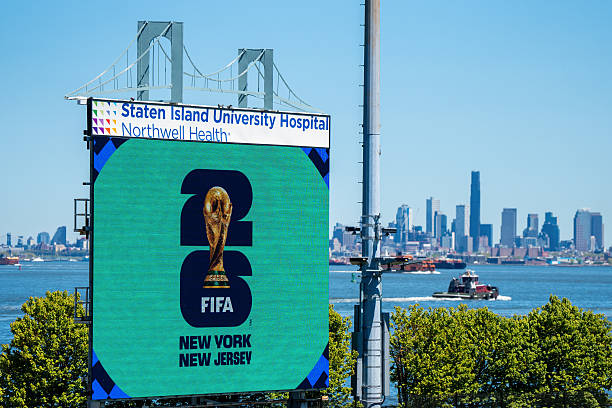
FIFA is set to overhaul its yellow card suspension rules ahead of the 2026 World Cup, proposing a dual amnesty system that would wipe players’ disciplinary records at two separate points during the tournament to prevent star names from missing the biggest matches of the competition.
Under the current rules, any player who accumulates two yellow cards across separate matches before the quarter-finals receives an automatic one-match ban. The system has been in place for years and has repeatedly denied fans the spectacle of watching their best players in crucial knockout games. With the 2026 tournament expanding to 48 teams and introducing an additional round of 32, FIFA believes the risk of key players being suspended for semi-finals through bookings collected as far back as the group stage has become too great to ignore.
The proposed solution involves clearing all yellow cards at two fixed points in the tournament first at the conclusion of the group stage, and again after the quarter-finals. Under this arrangement, players would still face a one-match ban for accumulating two bookings, but only within each defined window. A player who picks up a caution during the group stage would enter the knockout rounds with a clean slate, and similarly, a player reaching the semi-finals would carry no residual bookings from earlier knockout rounds. The matter is expected to be formally presented and debated at this week’s FIFA Council meeting in Vancouver, Canada.
The proposal is being framed as a fairness measure rather than a relaxation of discipline, with FIFA keen to stress that the two-yellow-card suspension threshold is not being raised. Officials argue that the expansion of the tournament format, not any desire to go soft on ill-discipline, is what has driven the review. The change is seen as a more measured solution than the alternative of raising the suspension trigger from two yellow cards to three, which critics felt would send the wrong message about protecting players from reckless challenges.
If approved, the new system would take effect at what is already set to be the most expansive World Cup in history, running from June 11 to July 19 across venues in the United States, Canada, and Mexico. For players, coaches and fans alike, the change would offer a significant reassurance — ensuring that a mistimed tackle in a group stage dead rubber cannot rob a semi-final or final of its biggest names.