Atiku, Obi, Kwankwaso Join ADC Protest Over INEC Decisions
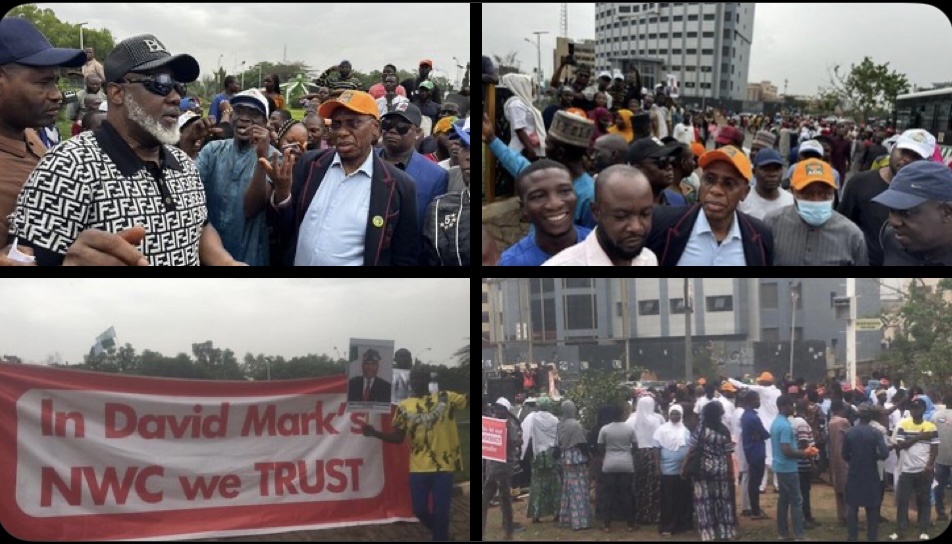
Leading opposition figures, including Atiku Abubakar, Peter Obi, and Rabiu Musa Kwankwaso, on Wednesday joined a protest organised by the African Democratic Congress (ADC) in Abuja over recent decisions by the Independent National Electoral Commission (INEC).
The demonstration, held in the Maitama district of the Federal Capital Territory, drew a large crowd of party supporters, civil society groups, and political stakeholders under the banner “#OccupyINEC.” Protesters expressed dissatisfaction with INEC’s handling of internal disputes within the ADC, accusing the electoral body of actions capable of undermining opposition participation in future elections.
The crisis stems from INEC’s refusal to recognise rival factions within the ADC leadership, pending the resolution of ongoing legal battles. The commission has also reportedly declined to accept official correspondence from either faction, a move party leaders say is restricting their operational activities. Speaking at the rally, Obi called on Nigerians to defend democratic principles, warning against any attempt to weaken multiparty democracy.
Our democracy must not be compromised. We must resist any move toward a one-party system,” he said. Other prominent politicians, including Rotimi Amaechi, Rauf Aregbesola, and Aminu Tambuwal, were also present at the protest, signalling growing unity among opposition figures.
Organisers said the rally was aimed at drawing public attention to what they described as undue interference in party affairs and to demand greater transparency and fairness from INEC. Political analysts say the protest reflects intensifying alignments ahead of the 2027 general elections, with the ADC increasingly seen as a potential coalition platform for opposition leaders seeking to challenge the ruling party.
Despite the strong turnout, the protest remained peaceful, with security personnel monitoring the situation. As legal proceedings over the ADC leadership crisis continue, observers believe the outcome could significantly shape the role of the party and the broader opposition landscape in the lead-up to the next general elections.