
Sterling Bank Leads Push for Stronger Nigeria Transport, Logistics Sector
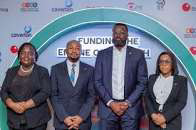
Industry leaders, policymakers, financiers and innovators have convened to explore ways of strengthening Nigeria’s transport and logistics sector, with a focus on driving economic growth and improving efficiency.
The discussions took place at the inaugural Nigeria Transport & Logistics Summit (NTLS) 2026, hosted by Sterling Bank at Eko Hotel & Suites.
The summit brought together key stakeholders to propose practical solutions aimed at building a more connected and efficient Nigeria through improved transport, mobility, and logistics systems.
Held under the theme “Funding the Engine of Growth,” the event highlighted the transport and logistics sector as a vital yet underutilised driver of productivity, regional integration and national development. Despite its importance, the sector continues to face challenges such as inadequate infrastructure, limited financing and policy inconsistencies.
Experts at the summit noted that logistics alone contributes an estimated N1 trillion to Nigeria’s Gross Domestic Product, while the broader transport and logistics ecosystem could be worth over N15 trillion if fully developed. However, persistent gaps in infrastructure and funding have hindered the sector’s growth and efficiency.
Speaking at the event, the Managing Director and CEO of Sterling Bank, Abubakar Suleiman represented by the CEO of Sterling One Foundation, Olapeju Ibekwe called for coordinated and decisive action to address these challenges.
He stressed that Nigeria must move beyond identifying problems to implementing integrated solutions capable of transforming the logistics landscape. According to him, improving ports, strengthening transport corridors and enhancing road and rail connectivity are critical steps toward boosting efficiency.
Suleiman further noted that Nigeria’s ability to compete both regionally and globally will depend on how effectively it manages the movement of goods and services, urging both public and private sector actors to embrace bold and coordinated execution.
Also speaking at the summit, Darlington Nwankwo, Divisional Head of Renewable Energy, Mobility, and Tourism at Sterling Bank, described logistics as the backbone of trade, industry, and national competitiveness.
He pointed out that although the sector accounts for a modest share of GDP, its overall impact on the economy is much larger when considered as a driver of productivity across sectors such as agriculture, manufacturing, and commerce.
Nwankwo emphasised that improving logistics infrastructure and efficiency is essential to enhancing Nigeria’s trade competitiveness, noting that the effectiveness of logistics corridors from ports to inland distribution networks directly influences economic growth.
The summit underscored the urgent need for strategic investments and reforms to unlock the full potential of Nigeria’s transport and logistics sector.