G7 Ministers Move to Address Financial Fallout Of Middle East War
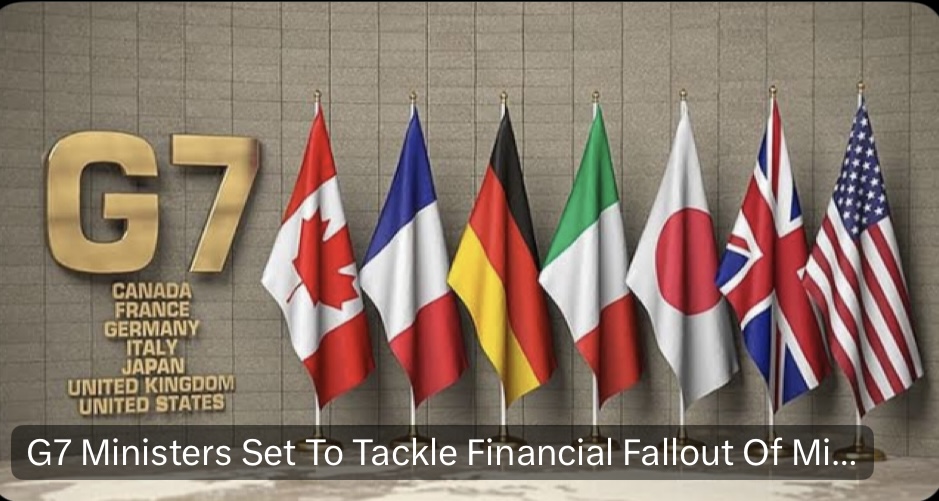
Finance ministers from the Group of Seven (G7) are set to hold high-level talks aimed at addressing the growing economic fallout from the ongoing conflict in the Middle East, as global markets reel from rising energy prices and heightened uncertainty.
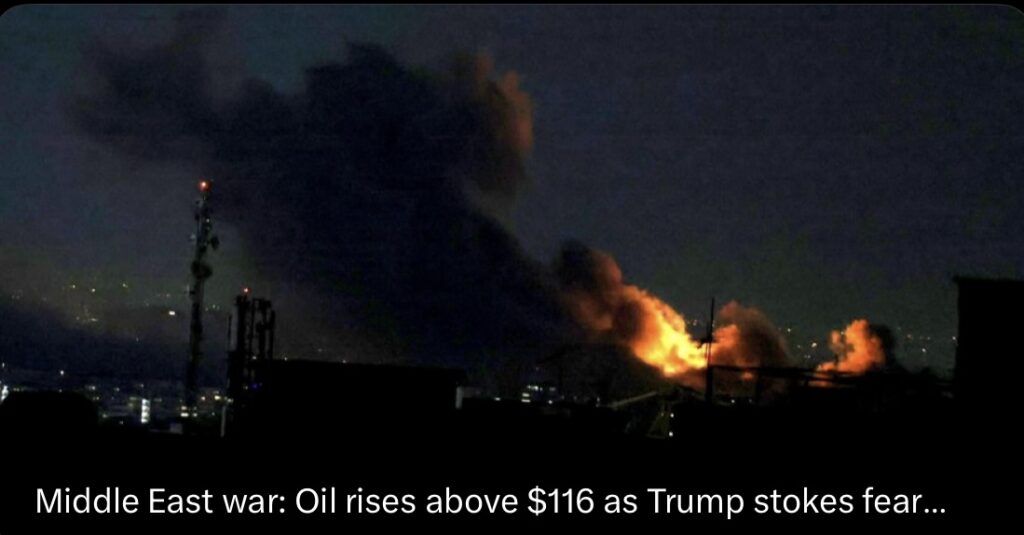
The meeting comes amid escalating tensions involving the United States, Israel, and Iran, which have disrupted critical oil supply routes and triggered sharp increases in crude prices.
Brent crude has surged past $115 per barrel in recent days, intensifying fears of a prolonged global economic shock. The conflict has raised concerns over the stability of key shipping lanes, particularly the Strait of Hormuz, a vital artery for global energy supplies.
Analysts warn that any sustained disruption could significantly constrain oil exports, driving further price spikes and exacerbating inflation worldwide. G7 ministers are expected to focus on coordinated policy responses to stabilize financial markets and cushion the impact on their economies.
Key discussions will likely include measures to ensure energy security, maintain supply chain stability, and prevent unilateral trade actions that could worsen the crisis. United Kingdom Finance Minister Rachel Reeves is expected to caution against protectionist policies, urging member countries to adopt a unified approach in managing the economic consequences of the conflict.
She is also anticipated to emphasize the importance of safeguarding global trade flows during the crisis. Beyond immediate concerns, the war is already straining global supply chains, with rising transportation and production costs affecting multiple sectors.
Food and fertilizer supplies are also under pressure, raising alarms for vulnerable and import-dependent nations. Economic institutions have warned that a prolonged conflict could push inflation higher across major economies while slowing global growth. There are increasing fears of stagflation—a combination of high inflation and weak economic expansion—if the crisis persists.
In response, some G7 leaders are expected to advocate for longer-term strategies, including accelerated investment in renewable and alternative energy sources to reduce dependence on fossil fuels and mitigate future geopolitical risks.
As the situation unfolds, the outcome of the G7 meeting is expected to play a crucial role in shaping the global economic response, with policymakers under pressure to act swiftly to prevent deeper financial instability.