
US Deploy Reaper Drones, 200 Troops To Nigeria
By 𝔸bdulrazak Tomiwa
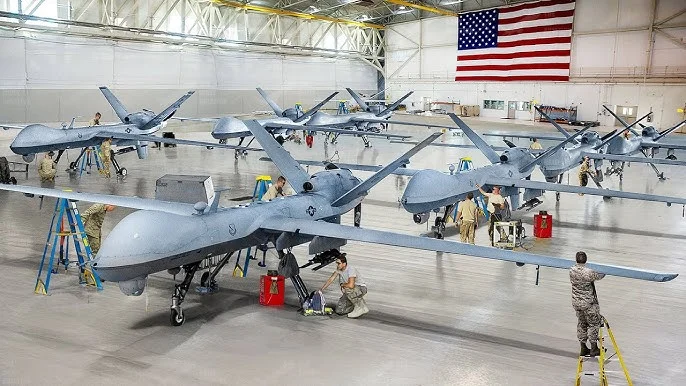
The U.S. has deployed MQ-9 Reaper drones and 200 personnel to Nigeria to assist against regional insurgents.
Reported in March 2026, this mission focuses on providing vital intelligence and training support. It represents a renewed security partnership aimed at tackling the growing threat of Islamist militants.
The deployment follows a formal request from the Nigerian government to enhance the tracking of terrorist threats. U.S. officials clarified that the mission is strictly non-combat, with personnel serving only in advisory and technical roles.
The goal is to empower Nigerian-led operations through high-level data and strategic guidance.
The MQ-9 Reaper drones are being used for long-endurance surveillance, staying airborne for over 27 hours. While capable of strikes, these drones are currently restricted to intelligence-gathering missions from the Bauchi airfield. They provide a crucial vantage point for monitoring militant movements across the northeast.
A new U.S.-Nigeria intelligence fusion cell now delivers actionable data directly to Nigerian field commanders. Major General Samaila Uba noted that this collaboration closes critical intelligence gaps. This partnership aims to increase strike precision while minimizing civilian casualties during counterterrorism operations.
This shift follows the 2024 closure of the U.S. drone base in neighboring Niger. After being expelled by the Nigerien junta, the U.S. sought new regional partners to monitor Al-Qaeda and ISIS-linked groups. Strengthening ties with Nigeria allows the U.S. to maintain a necessary security presence in West Africa.
The deployment marks improved cooperation following past diplomatic tensions regarding civilian protection. Both nations are now focused on a relationship built on mutual respect and shared security goals.
Nigeria’s military emphasizes that all foreign assistance strictly respects the country’s national sovereignty.
The timeline for the U.S. presence remains flexible, depending on the evolving security situation. Both governments agree that the duration of the mission will be determined by ongoing needs and bilateral agreements. Currently, the priority is enhancing Nigeria’s technical capacity to ensure long-term regional stability.