



Commentator Urges Political Succession Planning Around Tinubu Family
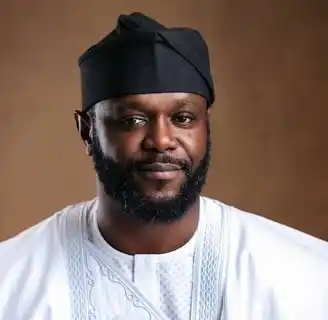
A political commentator, Emeka Obasi, has urged that the son of President Bola Tinubu, Seyi Tinubu, should consider contesting the Lagos State governorship election in 2027, while suggesting that his father prepares for succession planning at the national level.
Speaking in a reflective commentary, the analyst referenced the statement of former President Muhammadu Buhari during his inauguration in 2015, using it to emphasize the idea of leadership that transcends personal affiliations.
He noted that his background in a politically active family exposed him early to governance and political dynamics, citing his father’s involvement in the Nigerian Peoples Party during the Second Republic and his rise to local government leadership under the administration of Dee Sam Mbakwe.
The commentator also described Seyi Tinubu as a figure who has built relationships across different social and professional circles, arguing that he has focused more on supporting developmental efforts rather than pursuing personal financial gain from political connections.
He suggested that Seyi Tinubu’s long exposure to political activities and business experience positions him as a potential candidate for public office, stating that he could be suitable for the Lagos State governorship in 2027 and, in the longer term, capable of seeking higher national office.
The analyst further argued that political movements supporting President Tinubu could be better directed toward strengthening electoral outcomes at the state level, particularly in Lagos, rather than focusing solely on national political consolidation.
He also described President Tinubu as a dominant political figure who has maintained influence over time, including periods in opposition. He recalled Tinubu’s political resilience during earlier democratic transitions and credited him with playing a significant role in shaping modern political structures in the South West.
Drawing historical comparisons, he referenced global leaders such as Nelson Mandela, John F. Kennedy, and Vladimir Lenin to highlight leadership patterns and legacy, suggesting parallels in political influence and public perception.
He added that Seyi Tinubu has spent years observing and participating in political processes, and argued that his experience, combined with his business background, could make him competitive in future elections.
The commentator concluded that political succession discussions within the ruling structure should consider generational transition, noting that several Nigerian political families have produced multiple office holders across different levels of government.