
Mali Overhauls Embassies in Russia, China 5 Other Countries
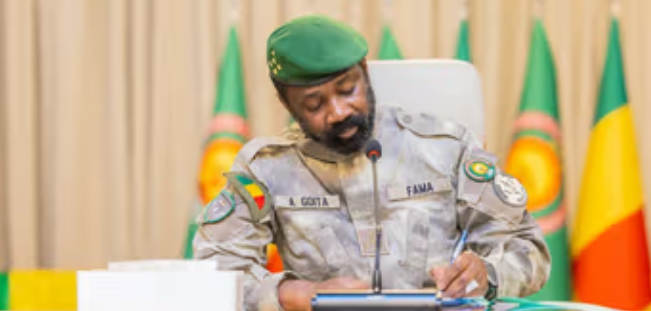
Malian leader, Assimi Goïta is accelerating the country’s diplomatic and economic repositioning, signaling a broader recalibration by the Alliance of Sahel States (AES) as it expands its global footprint and tightens control over its gold sector.
At a cabinet meeting held in Koulouba on March 18, the government approved a series of decrees establishing updated organizational frameworks for its embassies in Beijing, Berlin, Kigali, Rome, Cairo, and Moscow, alongside its consulate in Paris.
The reforms, signed by the Secretary General of the Government, Birama Coulibaly, aim to correct gaps in earlier frameworks while preparing the diplomatic corps for staffing and operational needs over the next five years.
The embassy restructuring reflects a deliberate effort by Mali—and by extension, the AES bloc—to deepen engagement beyond its immediate regional sphere. While the alliance, which includes Burkina Faso and Niger, has often been framed as pivoting away from traditional Western partners, the inclusion of capitals such as Berlin, Rome, and Paris suggests a more pragmatic strategy of diversifying partnerships rather than abandoning them entirely.
Alongside its diplomatic push, the government is reinforcing its grip on the country’s most strategic resource: gold. In 2022, Mali recorded gold production of 72.2 tonnes, including 6 tonnes from artisanal mining, which contributed 9.2% to the nation’s Gross Domestic Product and generated 763 billion CFA francs for the national budget.
Despite this contribution, Mali has faced difficulties in controlling the flows from artisanal gold mining and small mines due to disparities between official national statistics and the quantities received in destination countries.
To address this, authorities moved to establish a new state body tasked with overseeing precious substances. The planned Malian Office of Precious Substances is expected to formalize and secure the commercialization of gold from artisanal mining, a sector long plagued by informality and revenue leakages.
In a separate decree, the government approved the extension of an exploration permit for Roscan Gold Mali SARL in the Kandiolé-Nord area.
These reforms come as Mali seeks to maximize returns from its mining sector while asserting greater sovereignty over natural resources. Strengthening oversight of artisanal production could help boost state revenues amid fiscal pressure, while also improving traceability in global supply chains.
Beyond diplomacy and mining, the cabinet also endorsed a national entrepreneurship strategy for 2026–2030, aimed at fostering private sector growth and job creation. Together, the measures point to a dual-track strategy: opening outward to global partners while consolidating control at home over key economic assets.