


What Lessons for Nigeria from Botswana’s Diamond Recovery Process?
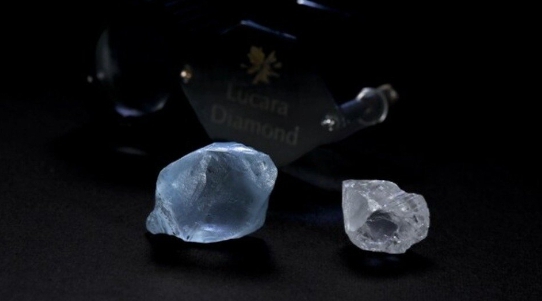
In the world of luxury and geology, few things spark the imagination like the discovery of a rare blue diamond. Last week, Canadian mining company Lucara Diamond Corp announced it had recovered a stunning 36.92-carat blue diamond from its Karowe mine in Botswana. Described as a high-quality “Type IIb”—a category so pure and rare that it accounts for less than 0.1% of all diamonds—the gem is a small fortune waiting to be cut, polished, and sold.
On the surface, this is a story about Botswana. It’s a testament to the riches buried beneath the Kalahari Desert and a headline that will attract gemstone connoisseurs from London to New York. But for Nigerians—from policymakers in Abuja to investors in Lagos and artisanal miners in the north—this discovery should be read less as a foreign news brief and more as a compelling case study. It is a vivid illustration of what is possible when geology meets good policy, advanced technology, and strategic vision.
Here is why Botswana’s blue diamond matters to Nigeria.
Botswana is often cited as Africa’s oldest continuous democracy, but its real success story is economic. Since gaining independence in 1966, it has transformed from one of the poorest countries in the world to an upper-middle-income nation. The primary driver? Diamonds.
The recovery of this blue gem is a reminder of the virtuous cycle that Botswana has managed to create: foreign investment (Lucara is Canadian) extracts resources responsibly, the government collects revenue and royalties, and those funds are reinvested into infrastructure, education, and healthcare.
For Nigeria, which is currently undertaking a major push to diversify its economy away from oil, the question is stark: Can we replicate this model with our own solid minerals? Nigeria is endowed with over 44 different commercially viable minerals, including gold, limestone, tin, lead, zinc, and various gemstones. Yet, the sector contributes less than 1% to the nation’s GDP. Botswana’s diamond fields demonstrate the sheer scale of wealth that awaits a well-regulated and efficiently managed mining sector.
Perhaps the most intriguing detail in the Lucara announcement is not the size of the diamond, but where it came from. The company stated that the blue diamond was recovered from the processing of “stockpile material.”
This is a critical detail. It means the diamond was found not in fresh rock being blasted from the earth, but in old piles of material that had been mined previously and set aside. Thanks to advanced X-ray Transmission (XRT) machines, Lucara is able to sift through this “waste” to find massive, high-value stones that older technology might have missed.
The Nigerian Lesson: Across Nigeria’s mining belts—particularly in areas with a history of tin mining on the Jos Plateau, or gold mining in Zamfara and Osun states—there are decades-old stockpiles and tailings. These are often viewed as environmental hazards. However, this discovery proves that one man’s waste is another man’s goldmine. With the right technology and investment, Nigeria could unlock significant value by re-processing these legacy sites, generating revenue while simultaneously cleaning up the environment.
The Lucara recovery is a massive vote of confidence in the African mining sector. It tells international investors that the continent remains a frontier for world-class discoveries.
Nigeria is currently competing with countries like Ghana, DRC, and Botswana for a share of the global mining exploration budget. To win that competition, Nigeria needs to offer more than just rich geology; it needs to offer stability, transparency, and ease of doing business. Success stories like this from neighboring countries put pressure on Nigerian regulators to speed up reforms. If Botswana can offer a secure environment where a $36-million-dollar stone can be found and sold transparently, why would a mining executive choose a high-risk jurisdiction elsewhere?
Finally, this discovery serves as a crucial reminder of the “double-edged sword” of natural resources. While diamonds built Botswana, they have fueled conflict and corruption in other parts of Africa (the infamous “blood diamonds”).
For Nigerian civil society and citizens, this story should prompt vigilance. As the government pushes forward with its plans to revive the solid minerals sector, the key question must always be: Who benefits? Botswana’s success is built on a framework of transparent dealings, strong state institutions, and partnerships with reputable international firms that adhere to high environmental and social standards.
As Nigeria opens up its mining sector, the recovery of this blue diamond is a beautiful symbol of potential. It is a glimmer of what lies beneath the soil of the continent. But it is also a test. The real challenge for Nigeria is not whether it can find gold or gemstones—they are already there—but whether it can manage them as wisely as Botswana has managed its diamonds.
For now, the 36.92-carat blue diamond is a gem that belongs to Botswana. But the lessons it carries belong to all of Africa. It is time for Nigeria to take notes.