


Stability in the Ivory Towers as Tinubu Breaks ASUU Strike Cycle
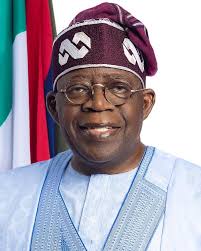
Nigeria’s public university system, long plagued by repeated shutdowns due to strikes by the Academic Staff Union of Universities (ASUU), appears to be witnessing a rare period of stability under the administration of Bola Ahmed Tinubu, who assumed office as Nigeria’s 16th President on May 29, 2023.
For more than two decades, industrial disputes between ASUU and successive federal governments frequently disrupted academic calendars across Nigeria’s public universities. Since the country’s return to democracy in 1999, ASUU has embarked on over 16 nationwide strikes, resulting in the closure of universities for more than 1,700 days, nearly five academic years lost.
Data on the strikes show that the longest disruptions occurred during earlier administrations. Under former President Muhammadu Buhari, universities were shut for roughly 580–630 days, the highest in Nigeria’s democratic era.
During the administration of Olusegun Obasanjo, ASUU embarked on seven strikes lasting about 541 days, while universities were closed for around 359 days under Goodluck Jonathan.
The late Umaru Musa Yar’Adua administration also experienced strike disruptions totalling approximately 127 days, further contributing to the long-running instability that has shaped Nigeria’s tertiary education system over the past two decades.
However, since Tinubu took office in 2023, Nigeria has not recorded any nationwide ASUU strike, marking a notable departure from the pattern of frequent academic shutdowns that characterised previous administrations.
Education analysts attribute the current stability partly to renewed engagement between the federal government and university unions, as well as policy efforts aimed at improving the management of the tertiary education sector. Since assuming office, Tinubu’s administration has also pursued broader reforms intended to strengthen national institutions and restore confidence in governance and public services.
Tinubu’s presidency, which began following his victory in the 2023 general election, has been framed by the government as a reform-driven era focused on stabilising key sectors of the economy and public administration.
For millions of Nigerian students and their families, the absence of a nationwide ASUU strike since 2023 has offered a rare sense of continuity in academic calendars which is a development many hope will signal a turning point for the country’s often turbulent university system.