


Abbas Warns Against Sudden Ban of Single Use Plastic
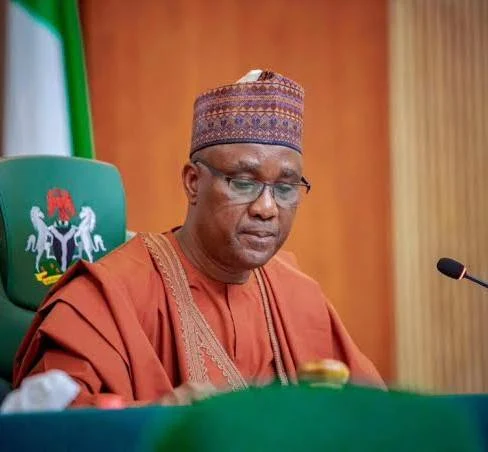
The Speaker of the House of Representatives, Tajudeen Abbas, has cautioned against an abrupt ban on single-use plastics in Nigeria, warning that a sudden policy shift could disrupt businesses and lead to job losses.
Abbas made the remark on Thursday in Abuja while declaring open a public hearing organised by the House Ad-hoc Committee on Preparedness for the Single-Use Plastic Ban at the National Assembly Complex.
Represented by the Deputy Chief Whip of the House, Isiaka Ibrahim, the Speaker acknowledged the growing environmental concerns linked to plastic waste but stressed that reforms must be introduced in a way that protects livelihoods and economic activities.
According to him, plastic products remain deeply embedded in Nigeria’s economic system, supporting industries involved in manufacturing, packaging, distribution and recycling.
He warned that implementing a ban without adequate planning could have unintended economic consequences.
Abbas noted that Nigeria is currently facing a serious plastic waste problem, which contributes to blocked drainage systems, declining soil quality and environmental degradation.
He also said plastic pollution threatens marine life along the Niger Delta and Atlantic coastline and can eventually enter the food chain.
The Speaker emphasised that tackling plastic pollution is necessary but insisted that any transition away from single-use plastics must be gradual, inclusive and supported by a clear policy framework to prevent economic disruption.
Earlier, Chairman of the House Ad-hoc Committee on Preparedness for the Single-Use Plastic Ban, Terseer Ugbor, said the panel had been tasked with developing a practical legislative strategy that balances environmental protection with economic stability.
Ugbor explained that the committee’s focus is to design a workable roadmap that will guide Nigeria’s transition away from problematic plastic materials.
He said the goal is not to debate whether a shift away from single-use plastics should occur, but to determine how the transition can be carried out in a structured and equitable manner that safeguards both the environment and the economy.
Ugbor added that the committee hopes to promote a policy direction that moves Nigeria away from the traditional “take-make-dispose” production model toward a circular economy that encourages reuse, recycling and sustainable innovation.
At the hearing, a coalition of civil society groups, including the Community Action Against Plastic Waste and the Young Female Journalists Network, expressed support for the proposed ban.
Speaking on behalf of the coalition, Errit Effanga urged the Federal Government to align Nigeria’s environmental policies with global initiatives aimed at reducing plastic pollution.
She noted that plastic production worldwide has expanded dramatically over the past decades, posing increasing threats to ecosystems and public health.
According to Effanga, global plastic production has increased more than 200 times since 1950, with more than 11 million tonnes of plastic waste entering aquatic ecosystems each year.
She added that plastics contain thousands of chemical additives that have been linked to health risks such as cancer, endocrine disruption and reproductive problems.
Effanga further noted that more than 130 countries have already introduced restrictions or bans on single-use plastics, with studies suggesting that such measures can reduce plastic pollution by between 30 and 80 percent within a few years.
However, representatives of manufacturers and businesses that rely heavily on plastic packaging warned against imposing an immediate ban.
The Executive Director of the Food and Beverage Recycling Alliance, Onaghise, said although the industry recognises the environmental concerns surrounding plastic waste, a sudden prohibition could disrupt businesses and investments.
She revealed that companies within the alliance have invested more than ₦1.3 billion in plastic waste collection systems, while the wider industry has committed over ₦3 trillion toward the development of recycling facilities.
Onaghise also pointed out that alternative packaging materials such as glass, paper and aluminium have their own environmental and logistical challenges, including higher production energy requirements, increased transportation costs and greater resource use.
She added that for sachet water, widely known as “pure water” in Nigeria, there is currently no broadly practical alternative to single-use plastic packaging.
Calls for tighter regulation or a ban on single-use plastics have grown in Nigeria in recent years as environmental groups, researchers and policymakers raise concerns about the effects of plastic pollution on public health and ecosystems.
Plastic waste has been linked to flooding in several Nigerian cities due to blocked drainage systems, while large amounts of plastic debris have also been discovered in rivers, coastal areas and farmlands.
Some state governments, including Lagos State, have already announced plans to restrict certain types of single-use plastics as part of wider environmental reforms.
Globally, many governments are introducing policies such as plastic bans, recycling targets and the promotion of alternative materials, a trend that has intensified discussions in Nigeria on how to develop a national strategy to address plastic pollution while protecting jobs and investments across the plastic industry.