



China Reinvents Fencing with Solar Panels
By 𝔸bdulrazak Tomiwa
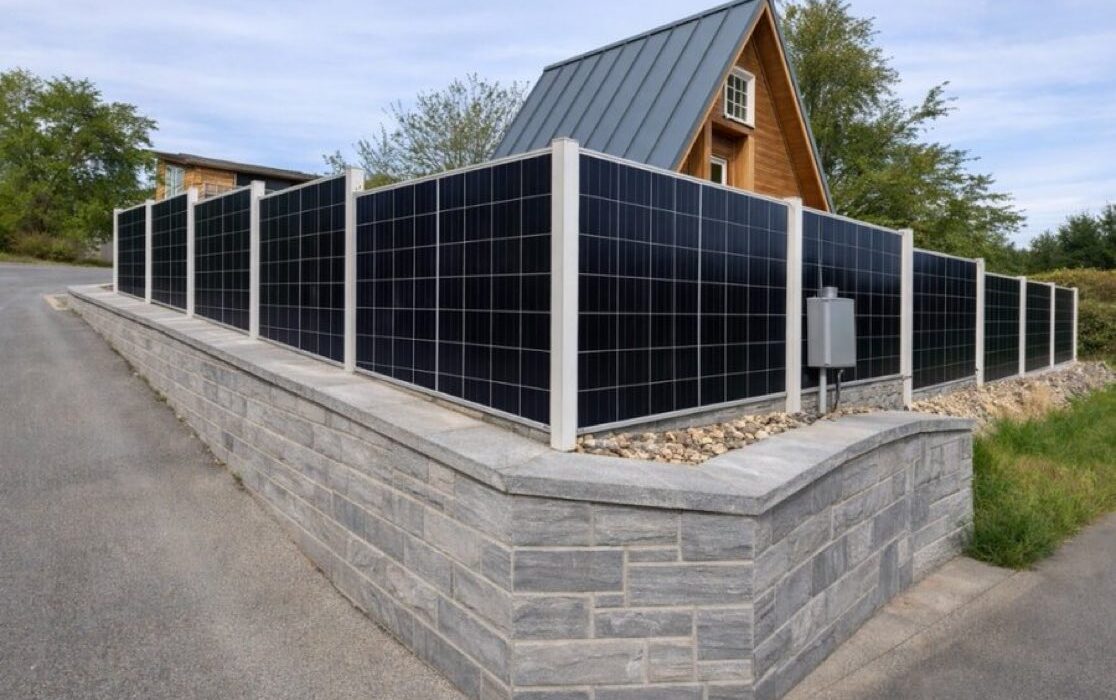
China is transforming its landscape by replacing traditional barriers with solar panel fencing. This initiative turns thousands of miles of property boundaries into active power plants, maximizing land use by generating clean energy vertically along farms and industrial sites.
The system uses bifacial panels that harvest sunlight from both sides, capturing direct rays and ground reflections.
Unlike flat arrays, these vertical fences are self-clearing for snow and dust, and they generate peak power during high-demand morning and evening hours.
In rural regions, these “power fences” facilitate agrivoltaics by providing shade and windbreaks for livestock. The design allows sheep to graze and tractors to pass freely, ensuring that renewable energy production and food farming thrive simultaneously on the same plot.
With module costs dropping to roughly $0.10 per watt, solar panels are now cheaper than many standard building materials. This makes solar fencing a self-amortizing asset for highways and cities, as the electricity generated eventually pays for the infrastructure’s installation.
As China nears its 2026 goal of in solar capacity, vertical fencing is becoming a standard infrastructure requirement. This shift from simple security to integrated energy is a key component of the nation’s strategy to reach carbon neutrality by 2060.