

Tinubu Signs Executive Order Mandating Direct Remittance of Oil, Gas Revenues to Federation Account
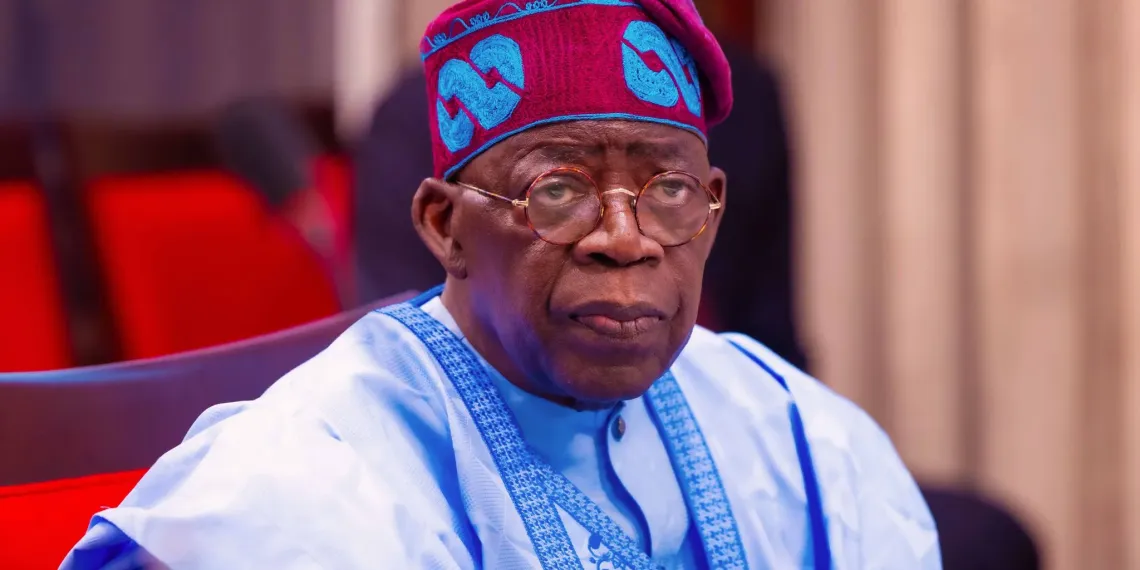
President Bola Tinubu has signed an Executive Order directing the immediate remittance of oil and gas revenues to the Federation Account, ending multiple deductions previously retained under the Petroleum Industry Act framework and restructuring revenue flows in the sector.
The order, signed on February 13, 2026, mandates that all royalty oil, tax oil, profit oil, profit gas, and any other revenues due to the Federal Government under production sharing, profit sharing, and risk service contracts be paid directly into the Federation Account.
The President said the directive was issued pursuant to Section 5 of the Constitution of the Federal Republic of Nigeria (as amended) and anchored on Section 44(3), which vests ownership and control of all minerals, mineral oils, and natural gas in the Government of the Federation.
According to the Presidency, the Executive Order seeks to safeguard and enhance oil and gas revenues, eliminate duplicative structures, curb wasteful spending, and restore constitutional revenue entitlements to the Federal, State and Local Governments.
Under the existing Petroleum Industry Act (PIA) framework, the Nigerian National Petroleum Company (NNPC) Limited retains 30 per cent of the Federation’s oil revenues as a management fee on profit oil and profit gas derived from production sharing contracts, profit sharing contracts, and risk service contracts. The company also retains 20 per cent of its profits for working capital and future investments.
The Federal Government considers the additional 30 per cent management fee unjustified, given the existing 20 per cent profit retention.
The Executive Order further stops NNPC Limited from collecting and managing the 30 per cent Frontier Exploration Fund established under Sections 9(4) and (5) of the PIA. The fund, sourced from profit oil and profit gas under relevant contracts, had been earmarked for frontier basin exploration.
Under the new directive, the 30 per cent profit previously allocated to the Frontier Exploration Fund will now be transferred to the Federation Account.
The Presidency said devoting such a large fund to speculative exploration risks accumulating idle cash balances and encouraging inefficient spending at a time when resources are needed for security, education, healthcare, and energy transition investments.
In addition, President Tinubu suspended payments of gas flare penalties into the Midstream and Downstream Gas Infrastructure Fund (MDGIF). The Commission is now required to remit all proceeds from gas flaring penalties directly to the Federation Account and cease payments into the MDGIF.
While the PIA established the MDGIF under Section 52(7)(d) and funded it through gas flaring penalties under Section 104, the Presidency noted that Section 103 of the Act had already created a separate Environmental Remediation Fund administered by the Nigerian Upstream Petroleum Regulatory Commission (NUPRC) for rehabilitating communities impacted by upstream petroleum operations, including gas flaring.
The government argued that the overlapping funds and deductions far exceed global norms and effectively divert more than two-thirds of potential remittances to the Federation Account, contributing to declining net oil revenue inflows.
The Executive Order also addresses structural concerns regarding NNPC Limited’s role as a concessionaire under production sharing contracts.
The Presidency stated that the current arrangement allows the company to influence operating costs while functioning as a commercial entity, creating potential competitive distortions and undermining its transition into a fully commercial operator as envisaged under the PIA.
To streamline operations, the President approved the constitution of a joint project team to execute integrated petroleum operations, with the Commission serving as the interface with licensees and lessees where upstream and midstream operations are combined.
An implementation committee has also been established to oversee coordinated execution of the Executive Order. Members include the Minister of Finance and Coordinating Minister of the Economy; the Attorney-General of the Federation and Minister of Justice; the Minister of Budget and National Planning; and the Minister of State for Petroleum Resources (Oil).
Other members are the Chairman of the Nigeria Revenue Service, a representative of the Ministry of Justice, the Special Adviser to the President on Energy, and the Director-General of the Budget Office of the Federation, who will serve as secretary to the committee.
President Tinubu described the reforms as urgent and necessary for national budgeting, debt sustainability, economic stability, and the overall well-being of Nigerians. He also indicated that his administration would undertake a comprehensive review of the Petroleum Industry Act in consultation with stakeholders to address identified fiscal and structural anomalies.
The Executive Order has been officially gazetted.