


Chief Justice Swears in 14 Judges, Warns Against Distractions, Blanket Attacks on Judiciary
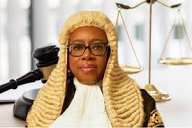
The Chief Justice of Nigeria (CJN), Kudirat Kekere-Ekun, on Wednesday swore in 14 new judges of the Federal High Court, charging them to uphold integrity, resist undue pressure, and remain focused amid growing scrutiny of the judiciary.
The ceremony, held at the Supreme Court Complex in Abuja, followed recommendations by the National Judicial Council (NJC) at its 110th meeting held on January 13 and 14. The council subsequently forwarded the names to President Bola Tinubu after security clearance reports returned no adverse findings.
Administering the Oath of Allegiance and the Judicial Oath, the CJN described the appointment as the assumption of a “sacred constitutional trust,” reminding the judges that they now belong to the law, their conscience and the Nigerian people.
She said their emergence followed one of the most rigorous, transparent and technology-enhanced judicial selection processes in the country’s history. According to her, the NJC and the Federal Judicial Service Commission strengthened evaluation mechanisms to ensure merit, integrity, competence and temperament guided the process.
For the first time in a more structured manner, shortlisted candidates’ names were published for public comment on their integrity and suitability. The CJN said the measure was designed to reinforce transparency, accountability and public confidence in the judiciary.
She urged the new judges to justify that confidence, noting that the Federal High Court occupies a pivotal place in Nigeria’s judicial architecture, with jurisdiction over matters affecting revenue, banking, maritime affairs, intellectual property and other complex commercial disputes.
Their decisions, she said, would influence markets, institutions, public confidence and governance stability.
The CJN also expressed concern over what she described as a troubling pattern of sweeping allegations of corruption against the judiciary. While acknowledging that constructive criticism is legitimate in a constitutional democracy, she cautioned against indiscriminate denunciations that erode public trust and stain reputations without evidence.
She stressed that where misconduct is established, it will be addressed firmly and transparently, assuring that the NJC remains vigilant and will discipline any judicial officer found wanting.
However, she warned that careless attacks on the institution could imperil the rule of law.
Admonishing the judges, she told them not to allow praise or criticism to distract them from their constitutional duty. She directed that their judgments must speak with clarity, their conduct remain above reproach and their courtrooms orderly.
The CJN emphasised discipline, punctuality and efficient case management, warning that justice delayed through indolence amounts to justice denied. She urged them to approach proceedings with mastery of their case files, patience to all sides and principled courage in decision-making.
She further cautioned against social, political, financial or relational pressures, noting that threats to judicial independence may come subtly through familiarity or influence. Maintaining measured distance from compromising entanglements, she said, is critical because perception in judicial life is almost as powerful as reality.
Describing the oath as a covenant with God and the Federal Republic of Nigeria, she reminded the judges that the robe signifies accountability, not superiority.
She encouraged them to embrace continuing judicial education, modern case management techniques and ongoing digitisation efforts within the court system.
Among the newly sworn-in judges are Sulaiman Amida Hassan, Chief Registrar of the Federal High Court from Kwara State; Onuegbu Chioma Angela, Director of Legal Services at the Federal Ministry of Justice from Imo State; Igboko Chinelo Conchita Onuegbu, Director of Legal Services and Legal Adviser at the Federal Ministry of Works representing Abia State; and Muhammad Bara’u Saidu, Secretary of the Judicial Service Commission in Sokoto State.
Others include Galumje Edingah, Deputy Chief Registrar (Litigation) of the Federal High Court, Taraba State; Ibrahim Vera Eneabo, Deputy Chief Registrar at the High Court of the Federal Capital Territory from Nasarawa State; Abubakar Musa Usman, Professor of Law and Dean of the Faculty of Law at Baze University representing Zamfara State; and Salihu Aisha Yunusa, Assistant Chief Registrar at the Federal Ministry of Industry, Trade and Investment representing the FCT.
Also sworn in are Ikpeme Joy Bassey, Assistant Director at the Ministry of Justice in Cross River State; Shehu Umar Adamu, Station Registrar at the Federal High Court, Bauchi Division representing Kaduna State; Ibrahim Mohammed Buba, Senior Legal Officer and Superintendent at the Economic and Financial Crimes Commission from Nasarawa State; Eigege-Binjin Nendelmun Judith, Principal Research Fellow at the National Judicial Institute representing Plateau State; Usoro Kuyik Uduak, Legal Assistant to a Justice of the Supreme Court representing Akwa Ibom State; and Nwoye Donatus Osinachi, a private legal practitioner from Enugu State.
The CJN congratulated the judges and expressed hope that their tenure would strengthen the Federal High Court and deepen public confidence in the administration of justice in Nigeria.