

Why Nigeria May Miss Universal Health Coverage 2030 Target, Warn Doctors
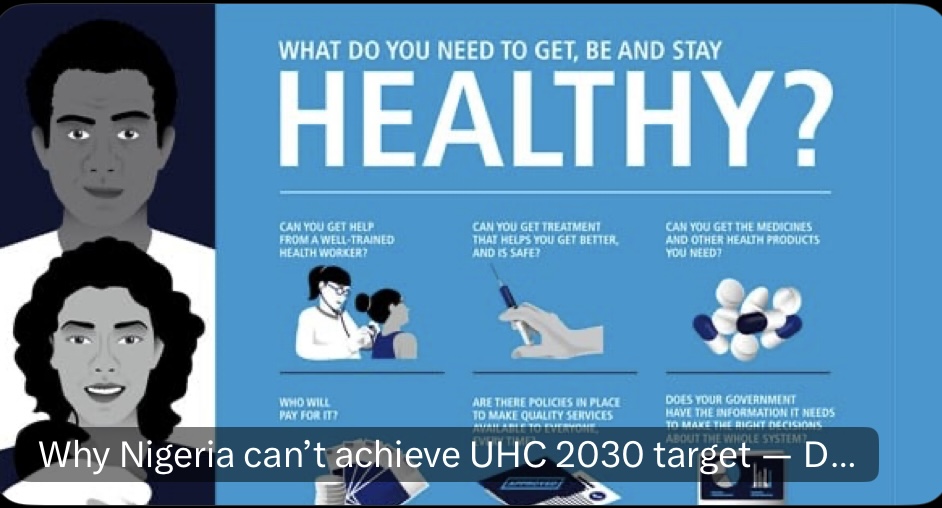
Medical experts have warned that Nigeria is unlikely to meet the Universal Health Coverage (UHC) 2030 target due to chronic underfunding, severe workforce shortages, weak primary healthcare systems and low health insurance coverage.
UHC, a global health goal championed by the World Health Organization, seeks to ensure that all people have access to quality health services without suffering financial hardship. Nigeria, like other member states, committed to achieving the target by 2030 under the Sustainable Development Goals. However, doctors and public health specialists say the country remains far from meeting key benchmarks. One of the major obstacles identified is inadequate budgetary allocation to the health sector. Nigeria has consistently allocated far below the 15 per cent benchmark agreed under the African Union Abuja Declaration of 2001. Experts note that government spending on health remains low, forcing millions of Nigerians to rely on out-of-pocket payments. According to recent health financing reports, out-of-pocket spending accounts for more than 70 per cent of total health expenditure in the country, exposing households to catastrophic health costs and deepening poverty. A public health physician, who spoke on the condition of anonymity, said, “As long as Nigerians are paying for healthcare directly from their pockets at this scale, Universal Health Coverage will remain a dream. Doctors also highlighted the alarming shortage of healthcare workers. The doctor-to-patient ratio remains far below the recommended standard, with one doctor reportedly serving thousands of Nigerians. The situation has been worsened by brain drain, as medical professionals continue to migrate abroad in search of better pay and working conditions. Specialists warn that without urgent measures to retain skilled workers, the country’s health system will remain overstretched. Maternal health indicators further reflect the strain, with limited numbers of gynaecologists attending to millions of births annually. Stakeholders emphasised that primary healthcare centres (PHCs), considered the foundation of UHC, are poorly equipped and understaffed in many rural and semi-urban communities. Many facilities reportedly lack essential medicines, equipment and electricity, forcing patients to seek care in expensive private hospitals or overcrowded tertiary institutions. Health policy analysts argue that without strong PHCs, preventive care and early treatment interventions will remain inadequate, undermining the broader UHC framework. Although Nigeria operates a national health insurance system, enrolment levels remain low. A large percentage of Nigerians, particularly those in the informal sector, are not covered by health insurance schemes. Experts stress that expanding insurance coverage and strengthening implementation mechanisms are critical to reducing financial barriers to healthcare access. The Federal Government has reiterated its commitment to reforming the sector through initiatives under the Ministry of Health and the ongoing health sector renewal agenda. Authorities have also announced plans to scale up health insurance enrolment in the coming years. However, doctors insist that without significant increases in funding, improved governance, and deliberate efforts to address workforce migration, Nigeria may struggle to meet the 2030 deadline.