
Okonjo‑Iweala Disowns Fake Social Media Videos, Says I Only Post on Twitter
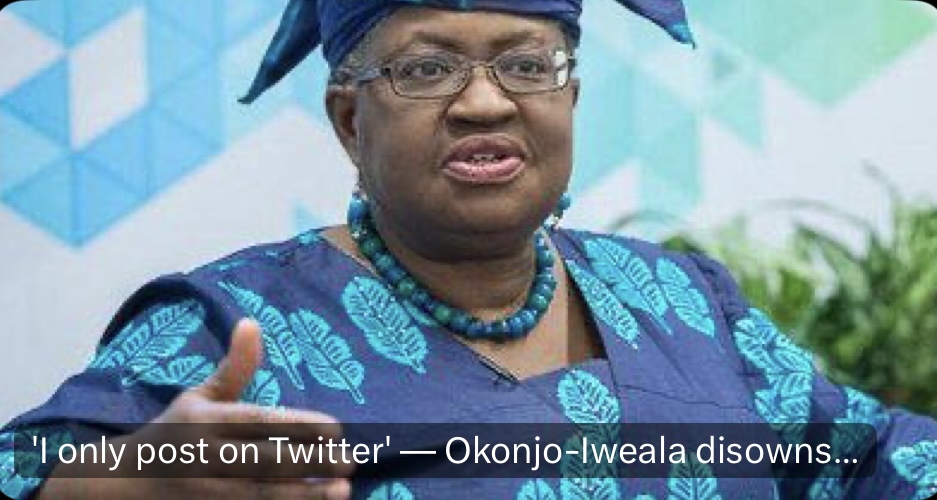
Director‑General of the World Trade Organization (WTO), Dr. Ngozi Okonjo‑Iweala, has issued a stern warning to the public over a fake video circulating on social media that falsely depicts her making statements she never issued.
The video, which has gained traction on multiple platforms, was described by Okonjo‑Iweala as unauthorised and misleading, stressing that it does not represent her views. In a public clarification, she emphasized that she does not post on Instagram, Facebook, or WhatsApp, and that any content using her image or voice on these platforms should be treated as fake. “I only post on Twitter (X),” Okonjo‑Iweala stated, urging social media users and Nigerians at large to exercise caution and verify the authenticity of online content before accepting or sharing it. The WTO chief’s statement comes amid growing global concerns about the misuse of AI‑generated media, including deepfakes, which are increasingly being used to impersonate public figures and spread misinformation. According to analysts, such content can appear highly realistic, making it challenging for the public to discern truth from fabrication. This is not the first time Okonjo‑Iweala has had to disown content falsely attributed to her. In previous years, she has repelled misleading WhatsApp messages and viral posts on social media platforms that were designed to create the impression that she was commenting on political or economic issues in Nigeria. In each case, her office has reiterated the need for Nigerians to remain vigilant and to confirm the source of information before circulating it further. Experts warn that the circulation of manipulated videos and AI‑generated content can have serious consequences, including the spread of false narratives, damage to public figures’ reputations, and the potential to mislead or manipulate public opinion. In her statement, Okonjo‑Iweala urged authorities and tech platforms to strengthen measures to combat misinformation and to educate the public about identifying fraudulent content. The incident highlights a broader challenge facing governments, institutions, and social media users worldwide, as advances in technology make it increasingly easy for individuals and groups to create and disseminate convincing but false digital content. The rise of such digital impersonation underscores the importance of digital literacy and responsible information sharing in today’s interconnected world.