

NBA President Did Not Label Judges, Lawyers Top Bribe Takers, Full Speech Shows
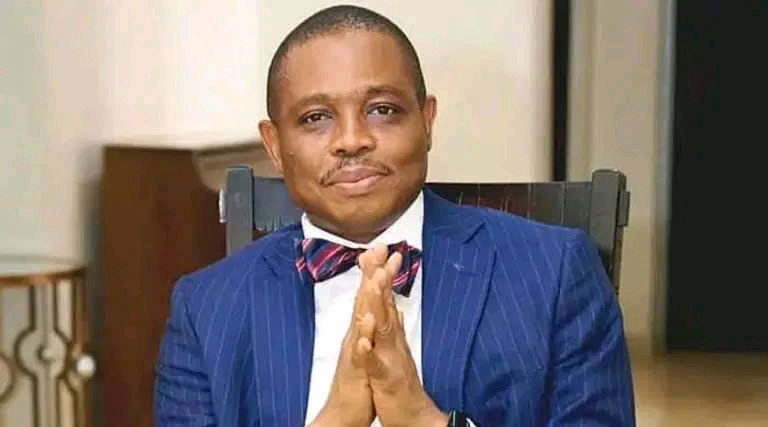
The Nigerian Bar Association has refuted reports claiming that its President, Mazi Afam Osigwe, SAN, described judges and lawyers as the “worst bribe takers and givers,” clarifying that his remarks at a recent public lecture were misrepresented.
A review of Osigwe’s full address delivered on February 6, 2026 shows that he made no such blanket accusation. Rather, the NBA President presented a data-based analysis of judicial corruption and called for broad reforms to restore confidence in Nigeria’s justice system.
Speaking on the theme “Judicial Corruption in Nigeria: A Menace to Democracy and Social Justice,” Osigwe examined corruption as a systemic problem with serious implications for democratic governance, social justice and public trust in state institutions.
He opened by acknowledging widespread public skepticism about the justice system, noting that many Nigerians increasingly view it as compromised by corruption, inconsistency and undue influence.
“The judiciary, which ought to be the last hope of the common person, is increasingly seen as an arena where justice can be delayed, manipulated, or outrightly purchased by the highest bidder,” he said.
Osigwe, however, cautioned against isolating the judiciary or the legal profession as uniquely culpable, describing corruption as a broader societal challenge that cuts across institutions.
He referenced global frameworks such as the United Nations Convention against Corruption and the World Bank to underline the damaging effects of corruption on democracy, human rights and economic life.
To support his arguments, the NBA President relied on empirical evidence. He cited a 2018 to 2020 survey by the Independent Corrupt Practices and Other Related Offences Commission, which estimated that about ₦9.4 billion was paid as bribes within the justice sector, with lawyers forming a significant share of those offering inducements.
He also referred to a 2024 joint survey by the United Nations Office on Drugs and Crime and the National Bureau of Statistics, which estimated that Nigerian public officials received about ₦721 billion in cash bribes in 2023, noting that judges were among several categories of officials affected.
Osigwe warned against drawing simplistic conclusions from these figures, stressing the interactive nature of corruption. Drawing from the views of senior advocate Tayo Oyetibo, SAN, he said, “It takes two to tango. Where there is no ‘offeror’ there can be no ‘offeree’.”
He explained that corruption persists not only because of compromised officials, but also because individuals, including lawyers and litigants, sometimes attempt to influence outcomes through inducements.
The NBA President also recalled past acknowledgements of corruption within the legal profession, citing a 2012 statement by former NBA President, J.B. Daudu, SAN, who admitted that corruption had become a serious threat to society.
“I make no distinction here between the Bar and the Bench. Corruption is now a live issue that is threatening to tear apart the foundations and fabric of society,” Osigwe quoted Daudu as saying.
He argued that such admissions demonstrate long-standing awareness of the problem and the need for sincere reform rather than denial or sensational interpretations.
Osigwe further observed that public perception, even when exaggerated, can be as harmful as proven wrongdoing. Referencing remarks by the Sultan of Sokoto, he noted that justice is increasingly perceived as a commodity accessible to the wealthy, leaving the poor vulnerable.
Despite the concerns raised, the NBA President commended ongoing reform efforts within the judiciary, praising the Chief Justice of Nigeria, Justice Kudirat Kekere-Ekun, for promoting integrity and courage on the Bench.
“Let your judgments be reasoned, impartial and courageous.
The Judiciary, as the final arbiter of justice, depends on the credibility of its officers,” he quoted the CJN as saying.
He also acknowledged the disciplinary role of the National Judicial Council, noting that proven cases of misconduct have resulted in suspensions, dismissals and compulsory retirements.
Osigwe warned that unchecked judicial corruption poses a direct threat to democracy, stressing that when courts are used to protect the corrupt or suppress political opponents, elections lose credibility and governance becomes arbitrary.
He concluded by urging collective responsibility in confronting the problem, saying, “History will judge us not by our eloquence, but by our willingness to act.”


