

Adedeji Expresses that Raw Material Exports Won’t Save Nigeria

Adedeji Expresses that Raw Material Exports Won’t Save Nigeria
By 𝔸bdulrazak Tomiwa
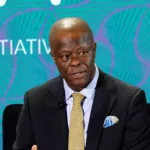
Nigeria Revenue Service Chairman, Zacch Adedeji has asserted that Nigeria must transition from raw material exports to an economy driven by innovation and complex production.
Speaking at Obafemi Awolowo University, he emphasized that this shift is the only way to ensure sustainable growth and long-term national prosperity.
Adedeji warned that Nigeria’s current economic structure is ill-equipped for a global market that prioritizes technology over natural resources.
He argued that relying solely on raw endowments is obsolete, noting that wealth is now generated through “productive complexity” rather than just supplying raw materials.
Highlighting a period of stagnation, Adedeji revealed that Nigeria added only six new products to its export basket between 2008 and 2023. He noted that while other countries modernized their industries over the last 25 years, Nigeria failed to diversify or upgrade its productive capabilities to meet global demands.
Critiquing the current model, Adedeji stated, “Nigeria witnessed stagnation in its exportation drive for three decades between 1998 and 2023, and only added six new products to its export basket list between 2008 and 2023. We are not just producing too little; we are producing too little of the wrong things. Growth must be rethought through the lens of economic complexity. It is not about producing more of the same commodities, but about learning how to make new, more sophisticated products.”
The NRS chief called for a paradigm shift that embraces innovation as a core economic value.
According to his media aide, Dare Adekanmbi, Adedeji believes that failing to transition toward a modern, knowledge-based economy will cause Nigeria to continue lagging behind its international peers.
Ultimately, Adedeji described Nigeria as a paradox of untapped potential. He urged policymakers to focus on manufacturing sophisticated goods instead of increasing commodity volumes, maintaining that prioritizing knowledge-driven production is the only way to break the cycle of economic stagnation.