Lai Mohammed Reflects on Buhari, Media Battles, ECOWAS Politics in New Book
Former Minister of Information and Culture, Lai Mohammed, has reflected on his relationship with former President Muhammadu Buhari, his years in government, and key media moments that defined the Buhari administration, following the release of his new book, Headlines and Soundbites: Media Moments That Defined an Administration.
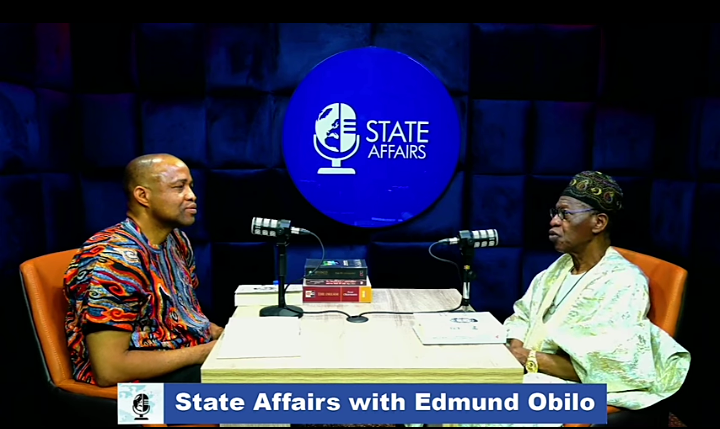
Mohammed spoke on State of the Nation with Edmund Obilo, a programme published on YouTube via @eobilo, where he discussed the book, his time in office, and his interactions with the former president after leaving government.
In the book, Mohammed wrote that when he began working on it in June 2025, he did not imagine that President Buhari “would not remain with us for a long time to come.”
He noted that although he served in Buhari’s cabinet from 2015 to 2023, their relationship went beyond official duties, describing Buhari as “friend, mentor, and boss.”
Speaking during the interview, Mohammed said he was privileged to have served as Minister of Information and Culture for eight uninterrupted years, making him the longest-serving holder of the office in Nigeria’s history. He said he gave his best during his time in government and maintained a special bond with Buhari, whom he described as his mentor and the person who brought him into political relevance.
After leaving office, Mohammed said he visited Buhari twice. The first visit took place in Daura, Katsina State, where he said the former president was healthy, alert and in good spirits.
He explained that an aviation strike at the time forced him to stay in Daura for three days, during which he spent extended time with Buhari.
He said the second visit occurred during Ramadan after Buhari had relocated. Mohammed stated that he informed Buhari ahead of the visit, spent about one and a half hours with him, broke fast together, prayed together, and departed the following day.
According to Mohammed, their discussions during the visits focused largely on regional politics, particularly issues relating to the Economic Community of West African States (ECOWAS), rather than domestic political matters. He added that Buhari remained in high spirits throughout their conversations.
Mohammed also recounted his firsthand experience of the Boko Haram insurgency while in office, explaining that he undertook visits to Maiduguri and several previously recaptured towns, including Konduga, Bama, and Gwoza, in consultation with the Minister of Defence. He said the visits were aimed at understanding the situation on the ground and speaking authoritatively on the issue of terrorism.
He said the trip was designed to include about 40 local and international journalists, but clearance issues arose shortly before departure.
Mohammed noted that during his visits to the affected areas, military officers provided him with full security coverage.
According to him, the decision to visit the conflict zones was driven by the need to “control the narrative” around Boko Haram, especially in response to claims that the government’s efforts were mere propaganda. He said seeing the situation firsthand gave him the confidence to respond publicly to critics.
Mohammed further highlighted his role in initiating media strategies such as campaigns in support of the military and town hall meetings, which he said were backed by President Buhari.
He explained that the town hall meetings brought together ministers from key sectors to engage Nigerians on issues such as infrastructure, insecurity and social welfare.
He said the meetings featured ministers responsible for works and housing, transportation, aviation, finance, budget and planning and water resources, depending on the theme, adding that inter-ministerial collaboration was central to the initiative.
Mohammed thanked the programme host for reading his book, stressing the importance of documenting experiences in public office for posterity. He said Headlines and Soundbites was written to preserve key moments and decisions that shaped the Buhari administration’s engagement with the media and the public.