
West African Leaders Unite Against Surge in Terrorism, Extremism
West African leaders have declared a united front against rising terrorism and violent extremism, warning that the region has become the global epicentre of attacks and that inaction is no longer an option.
The commitment came at the end of a two-day High-Level Consultative Conference on Regional Cooperation and Security, held in Accra from January 29 to 30, 2026.
A joint communiqué released on Sunday highlighted the alarming security situation, noting that West Africa now experiences at least eight terror attacks daily, claiming an average of 44 lives.
The statement added that more than half of all global terrorism-related deaths occur in the region.
“Recognising that West Africa and its neighbours are linked through geography, trade routes, shared ecosystems, and communities dependent on cross-border movements, our region is currently the global epicentre of terrorism and violent extremism.
We are witnessing an alarming uptick in extremist attacks for which inaction is not an option,” the communiqué said.
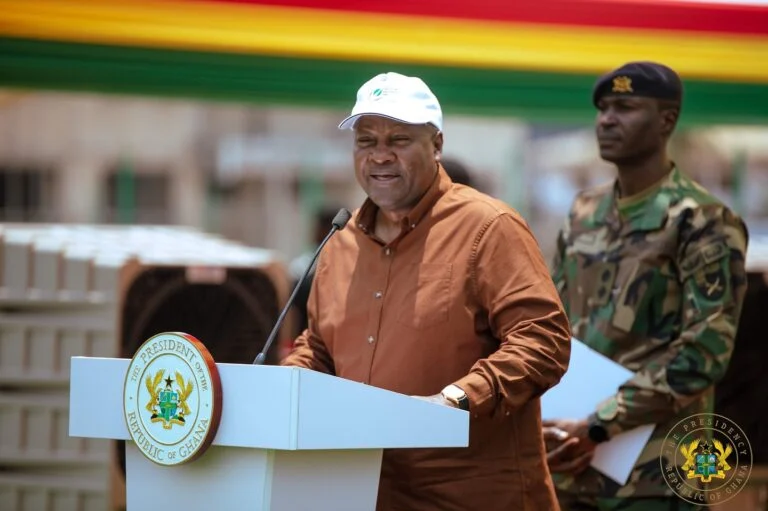
The conference was chaired by Ghanaian President John Mahama, with Presidents Julius Maada Bio of Sierra Leone and Joseph Boakai of Liberia leading their delegations.
Representatives from Burkina Faso, Mali, Mauritania, Nigeria, Senegal, and Togo also attended.
Leaders stressed that insecurity in one country quickly spills over into others, with fragmentation carrying heavy economic, social, and security costs.
They called for moving beyond episodic diplomacy to establish a structured and permanent framework for regional cooperation.
The communiqué reaffirmed the leaders’ commitment to strengthening collaboration in confronting evolving challenges in peace, security, and governance.
“Sustainable security in West Africa calls for a shift toward a human security approach, underpinned by regional solidarity, respect for sovereignty, and a people-centred, gender-responsive approach to peacebuilding,” the statement added.
On counterterrorism, participants pledged to enhance intelligence and information sharing, harmonise legal frameworks, and strengthen de-radicalisation programmes.
They also agreed to regular meetings to review peace and security commitments and to improve cross-border prosecution of terrorism-related offences while protecting human rights.
The summit endorsed “hot pursuit” arrangements through bilateral, minilateral, or multilateral agreements to combat the movement of criminal and extremist elements. Leaders agreed to develop a foundational Memorandum of Understanding and protocols on security cooperation, with a draft to be prepared within three months and finalised within six under the leadership of Ghana’s foreign minister.
Acknowledging that military action alone cannot secure lasting peace, the leaders committed to prioritising human security issues such as food security, healthcare, job creation, and education.
“Military responses alone cannot ensure lasting peace. We must bolster local governance so that the state is felt through service delivery, not only through security enforcement,” the communiqué said.
Climate change was also recognised as a “threat multiplier,” and leaders resolved to integrate climate and food security considerations into regional peace planning, alongside establishing a collective disaster preparedness and humanitarian response framework.
Looking ahead, the leaders agreed to hold the consultative conference biannually and to create a mechanism to track the implementation of decisions.
They issued a strong call to action, emphasising that commitments must translate into measurable outcomes that protect the lives and livelihoods of citizens across West Africa.