


Seven Pillars Distinguishing the Middle Belt from Arewa
Seven Pillars Distinguishing the Middle Belt from Arewa
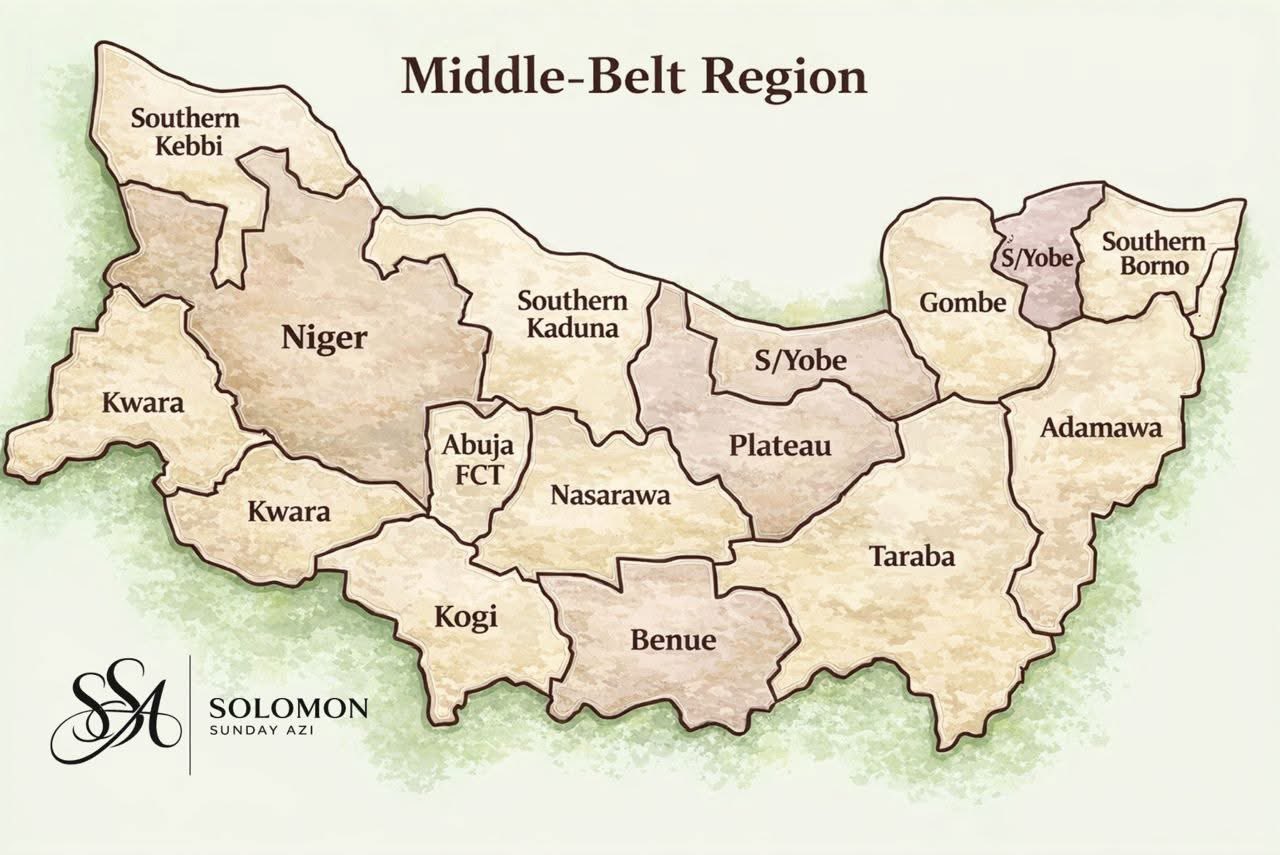
Here are seven key factors that separate the Middle Belt’s identity from the “Arewa” North. This push for autonomy emphasizes a unique socio-cultural landscape defined by indigenous heritage and secular governance.
The first distinction is the preservation of culture and tradition. Unlike the far North, the Middle Belt maintains its ancestral customs over foreign religious identities. During festivals, Christians and Muslims unite through traditional music and rites rather than adopting Arab or European personas.
Socially, the Middle Belt remains a secular and liberal region. It rejects Sharia law in favor of religious freedom, often seeing Christians and Muslims coexisting within the same families. This pluralism acts as a natural deterrent against the religious extremism found in other regions.
The region is a “tapestry” of over 100 ethnic groups, making it the most diverse corridor in Nigeria. This contrasts sharply with the Hausa-Fulani and Kanem-Borno civilizations, as the Middle Belt’s diversity prevents the dominance of a single religious or ethnic hegemony.
Cultural lifestyle also marks a clear divide. In states like Plateau and Benue, the consumption of pork and Burkutu is a standard social practice. Proponents argue these freedoms reflect a grounded, community-focused lifestyle that stands in opposition to the radicalization seen elsewhere.
A significant social difference is the absence of the Almajiri system. The Middle Belt prioritizes formal education, ensuring children are not left to beg on the streets. This educational focus prevents the rise of political thuggery and fosters a more stable, skilled youth population.
Economically, the region serves as the “Food Basket of Nigeria.” The Benue basin produces 80% of the nation’s yams and cassava, while the Plateau’s unique climate allows for the exclusive cultivation of strawberries, apples, grapes, and specialized vegetables like broccoli and carrots.
Ultimately, the Middle Belt defines itself through its rejection of terrorism and extremism. By fostering communal unity over sectarian divides, the region positions itself as a stable, productive buffer that contributes uniquely to the Nigerian federation’s economic and social health.