


COAS Flags PTSD, Drug Abuse as Emerging Internal Threats to Nigerian Army’s Operational Effectiveness
The Chief of Army Staff (COAS), Lieutenant General Waidi Shaibu, has warned that Post-Traumatic Stress Disorder (PTSD) and drug abuse are increasingly posing serious internal threats to the operational effectiveness of the Nigerian Army, despite ongoing gains in counter-insurgency and internal security operations.
He stressed that while advanced weapons, technology and battlefield tactics remain crucial, the mental resilience and moral strength of soldiers are equally decisive in determining mission success.
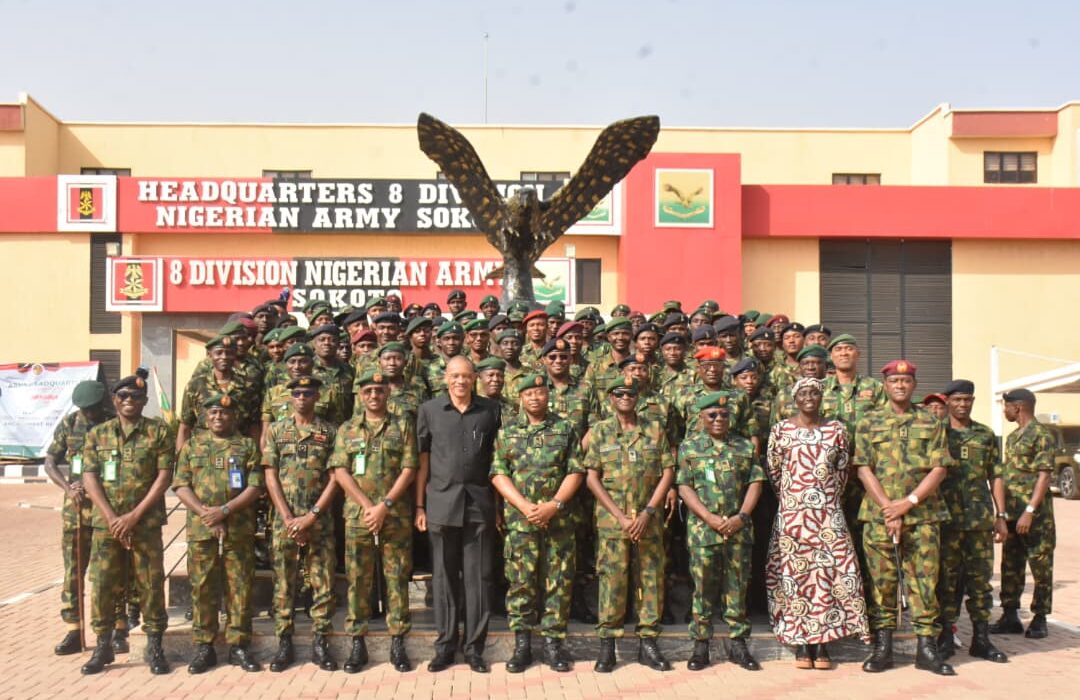
The Army Chief made this known on Thursday at a high-level seminar organised by the Army Headquarters Department of Transformation and Innovation, themed “Warrior Ethos: A Tool for Building Unit Cohesion and a Combat-Ready Force,” held at the Headquarters 8 Division Auditorium.
The seminar attracted senior military officers and personnel drawn from the Theatre Command of Joint Task Force North-West, Operation FANSAN YAMMA (OPFY), as well as other key security stakeholders.
Represented at the event by the Theatre Commander of OPFY, Major General Warrah Idris, Lieutenant General Shaibu described a strong warrior ethos as the bedrock of combat readiness, unit cohesion and sustained operational success within the Nigerian Army.
“A strong warrior ethos is the foundation upon which combat readiness and operational effectiveness are built.
It instils discipline, courage, mental toughness and selfless service qualities that are indispensable on today’s complex battlefields,” the COAS stated.
He noted that the prolonged nature of counter-insurgency, anti-banditry and internal security operations across different parts of the country has subjected troops to intense physical and psychological strain, often under extreme and hostile conditions.
According to him, such pressures have made mental health challenges, particularly PTSD, alongside substance abuse, critical leadership concerns that must be addressed urgently.
“Post-Traumatic Stress Disorder and drug abuse constitute dual threats that silently erode discipline, morale and fighting efficiency. If not properly addressed, they can undermine the very strength of our units,” he warned.
The Army Chief emphasised that neglecting these internal challenges could weaken frontline effectiveness, compromise decision-making under fire, and strain unit cohesion, even in well-trained formations.
He therefore called for a more holistic approach to soldier development, combining combat training with psychological support systems, ethical reorientation and welfare initiatives aimed at preserving the mental wellbeing of troops.
The seminar, according to organisers, forms part of the Nigerian Army’s broader transformation agenda to build a more professional, resilient and combat-ready force capable of responding to evolving security threats across the country.
Participants at the event also engaged in discussions on leadership, discipline, mental health awareness and the role of shared values in sustaining morale during extended operations.
The Nigerian Army has in recent years intensified operations against insurgents, bandits and other criminal elements nationwide, with military authorities acknowledging that the human cost of prolonged deployments requires renewed attention to soldiers’ mental and emotional health.