

Court Sets 10-Day Deadline to Wrap Up Emefiele’s EFCC Naira Redesign Trial
Court Sets 10-Day Deadline to Wrap Up Emefiele’s EFCC Naira Redesign Trial
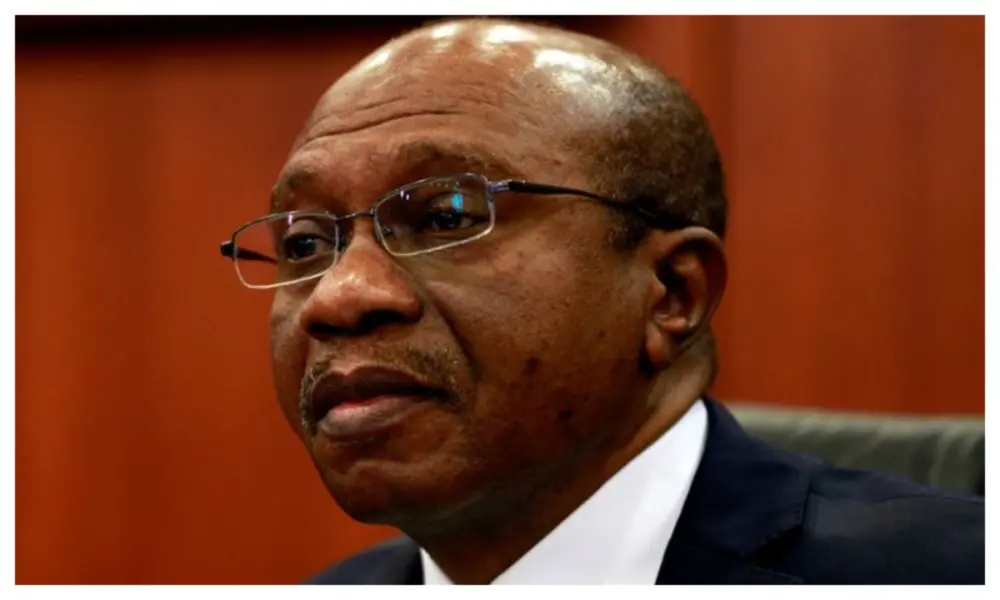
A Federal Capital Territory High Court has designated 10 additional dates to wrap up the trial involving corruption allegations brought by the Economic and Financial Crimes Commission (EFCC) against Godwin Ifeanyi Emefiele.
The former Governor of the Central Bank of Nigeria (CBN) is facing charges related to the controversial naira redesign policy.
The timeline was established on Wednesday by Justice Maryann Anenih after an agreement was reached between the EFCC’s legal representative, Rotimi Oyedepo, SAN, and Emefiele’s lead counsel, Olalekan Ojo, SAN.
The court has earmarked February 3 and 10; April 1 and 2; May 11, 12, 13, and 14; and June 9 and 10 as the final dates for the legal proceedings.
The trial, which began in 2024, is slated for completion within this period.
Justice Anenih urged both legal teams to adhere strictly to the scheduled timeframe, promising that the court would provide the necessary cooperation to ensure the matter is concluded as planned.
During Wednesday’s session, an EFCC operative and witness, Emere Chinedu, acknowledged that the administration of former President Muhammadu Buhari had formally confirmed to the commission that Emefiele received authorization to redesign the currency.
However, the witness clarified that the correspondence from the Presidency specified that the production of the new banknotes had to be carried out within Nigeria, contradicting the former CBN governor’s decision to have the printing done abroad.
Chinedu, who led the inter-agency team investigating the former apex bank chief, noted that Emefiele provided six different extrajudicial statements during the inquiry to explain his actions.
He testified that these documents were recorded between October 26 and November 2, 2023.
“In the course of our job, we extended our investigation to the State House for records of approval for the naira redesign.
The response of the State House was communicated to the EFCC in writing.
“The State House gave approval for the naira redesign, but with a proviso that it must be done locally,” the witness said.
Under cross-examination by Olalekan Ojo, SAN, the witness refused to comment on Emefiele’s assertion that Abdulrasheed Bawa, the former EFCC Chairman, was actually the one who first proposed the currency redesign to President Buhari.
The witness maintained that the EFCC lacks the authority to initiate changes to the currency’s appearance, noting that any involvement by the commission in such matters would be strictly in an advisory capacity.
Regarding various television news clips presented by the EFCC showing citizens experiencing difficulties during the policy implementation, Chinedu admitted these recordings were produced before his investigative team was even formed.
He explained that the footage from various broadcasters was sourced from the internet by the panel to illustrate the hardships faced by the Nigerian public during the redesign process.
The witness further admitted that he did not know the specific media personnel responsible for the reports, nor did he conduct interviews with anyone from the television stations involved.
Emefiele, who is being tried under charge number FTC/HC/CR/264/2024, has maintained his innocence regarding all allegations.
Justice Maryann Anenih has adjourned the proceedings until February 3 for the continued cross-examination of the witness.