
US Threat Causes Regional Instability, Iranian President Tells Salman
US Threat Causes Regional Instability, Iranian President Tells Salman
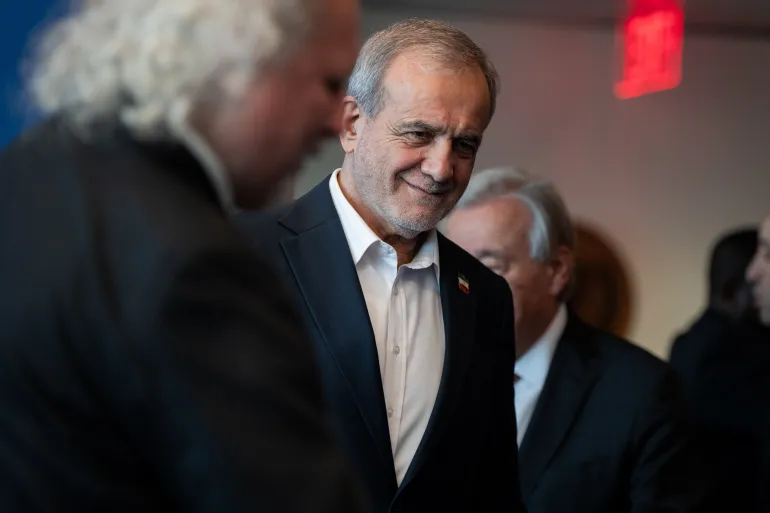
Iranian President, Masoud Pezeshkian hàs called Saudi Crown Prince, Mohammed bin Salman to discuss rising Middle East tensions.
Pezeshkian warned that the United States’ increased military presence in the Gulf is a primary driver of regional instability. This high-level dialogue occurs as Washington deploys significant naval and air assets to the area as a deterrent against Tehran.
The Iranian president argued that U.S. threats do nothing to enhance security and instead, exacerbate existing regional frictions.
He stressed that foreign military intervention often proves counterproductive to peace efforts. Pezeshkian advocated for a unified approach among Middle Eastern nations, asserting that regional powers must lead their own security initiatives.
Pezeshkian highlighted the shared economic and security risks that a major conflict would impose on all neighboring countries. He suggested that regional prosperity is impossible without sustained tranquility and cooperation.
The Iranian leader characterized Washington’s current rhetoric as a direct obstacle to the diplomatic progress recently made between Tehran and Riyadh.
In response, Salman offered reassurances regarding Saudi Arabia’s neutral stance. The Kingdom reportedly confirmed it would not allow its territory or airspace to be used for military strikes against Iran. This position reflects Riyadh’s strategic priority to avoid being caught in a direct confrontation between the U.S. and Iran.
The call comes at a critical time for Iran, which is facing a devalued currency and ongoing domestic unrest.
Tehran has accused the U.S. of inciting internal protests, while Washington claims its buildup is a necessary response to Iranian “aggression.” Through this outreach, Pezeshkian hopes to break Iran’s isolation and build a regional buffer against Western pressure.
The president reiterated that the destiny of the Middle East should be determined by its own residents rather than external powers.
By engaging Riyadh directly, Pezeshkian sought to prove that regional diplomacy is the most effective defense against foreign interference. The conversation underscores Iran’s shift toward prioritizing ties with its immediate neighbors.
Concluding his appeal, the president emphasized the futility of continued escalation and the need for diplomatic solutions. Pezeshkian emphasised that “regional instability benefits no one” during the call, urging a return to dialogue. His message warns that any further volatility would ultimately undermine the long-term ambitions of every nation in the Gulf.