

World Environmental Education Day: Awareness is Good, Action is Better
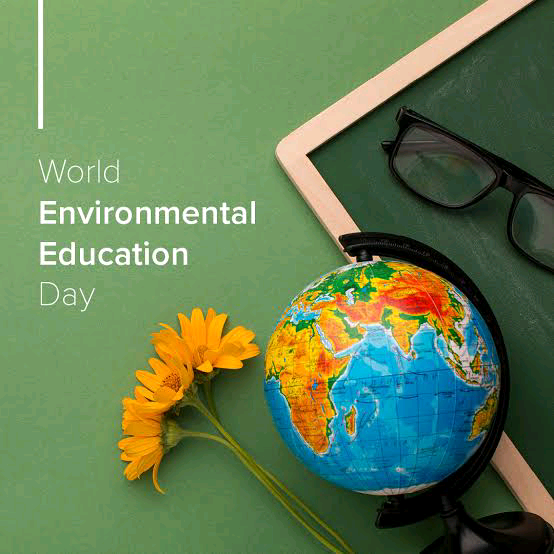
Every January 26, the world marks World Environmental Education Day serving as a reminder that protecting our planet begins with knowledge. This day finds its roots in the 1972 United Nations Conference on the Human Environment in Stockholm, which first highlighted the global need for environmental guidance and education.
Yet in Nigeria, environmental education remains more of a slogan than a structured reality. While awareness campaigns trend on social media for a day, real environmental understanding is still missing from many classrooms and communities.
This is a gap we can no longer afford to ignore.
Nigeria faces serious environmental challenges: flooding, deforestation, poor waste management, pollution and climate-related disasters.
Ironically, many citizens affected by these problems lack basic knowledge of how their daily actions contribute to them or how to prevent them. This is where environmental education becomes not just important, but urgent.
Globally, organisations like the International Association of Educating Cities (IAEC) share city-led environmental initiatives that educate citizens on sustainable practices. Locally, groups such as the Nigerian Environmental Society (NES) organise street clean-ups, workshops and tree-planting events to encourage direct participation in environmental protection. Schools also serve as key venues for these celebrations, hosting activities like poetry, drama, and inter-school competitions to sensitise young people to climate change, waste management and sustainable living.
Government involvement is equally critical. The Federal Ministry of Environment frequently highlights policies on plastic waste management and promotes initiatives for a more sustainable nation.
Nigeria has committed to reducing greenhouse gas emissions by 20% unconditionally and 45% with international support, according to the Department of Climate Change (DCC). The DCC, established under the Ministry, implements climate change policies and programs including tree planting campaigns, renewable energy adoption, improved transport systems and public awareness programs. These actions aim to reduce emissions and improve health by limiting air pollution.
Despite these efforts, much more is needed.
Environmental education should be a core and practical part of the school curriculum. Early education on waste separation, recycling, tree planting and climate responsibility fosters lifelong habits.
Critics may argue that Nigeria has more pressing educational challenges such as overcrowded classrooms and inadequate facilities. While true, environmental education is not a luxury; it is an investment in a resilient, sustainable future.
On this World Environmental Education Day, celebration should go beyond hashtags and ceremonial speeches. Policymakers must integrate environmental studies into national curricula. Schools must encourage practical environmental projects. Media organisations must sustain public awareness. And young people must see themselves as environmental ambassadors, not passive observers.
Awareness is good. But action is better. The future of Nigeria’s environment depends on what we teach today.