

From Confrontation to Collaboration: Analyzing President Tinubu’s Diplomatic Masterclass
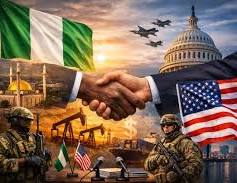
From Confrontation to Collaboration: Analyzing President Tinubu’s Diplomatic Masterclass
In the volatile theater of international relations, where a single tweet or a misplaced word can trigger a diplomatic meltdown, the hallmark of true leadership is the ability to maintain composure under fire. Recently, Nigeria found itself at the center of such a storm, navigating a high-stakes standoff with the United States.
Following a period of intense pressure, United States President Donald Trump designated Nigeria as a Country of Particular Concern (CPC) in November 2025. This designation, rooted in allegations of “Christian persecution,” was accompanied by a characteristically blunt threat to enter Nigeria “guns-a-blazing” to resolve the internal security crisis.
For many observers, this was a moment that signaled imminent panic and a potential breakdown of national sovereignty. However, for President Bola Ahmed Tinubu, it served as an opportunity for a diplomatic masterclass—a strategic pivot that transformed a threat of violation into a triumph of international partnership.
The timing of the US designation was particularly sensitive, coming on the heels of the tragic Kwara church attack in mid-November 2025. During a live-streamed worship session at a Christ Apostolic Church branch in Eruku, terrorists abducted dozens of worshippers, providing fuel for a narrative that Nigeria was undergoing religious cleansing.
While critics clamored for a combative response to Washington’s accusations, President Tinubu chose the path of intellectual honesty and fact-based engagement. He recognized that while attacks in Christian-dominated areas like Yelwata and Jos are devastating, they are often the result of complex factors like resource competition and ethnic friction.
The administration argued that these tragedies result from long-standing farmer-herder clashes rather than state-sanctioned religious bias. Crucially, they pointed to the equal, if not greater, suffering in Muslim-dominated enclaves in Zamfara, Borno, and Katsina, where terrorism knows no religious boundaries.
Instead of engaging in a public war of words, Tinubu deployed his National Security Adviser, Mallam Nuhu Ribadu, to Washington. This move was a calculated “chess move” in diplomacy, intended to shift the conversation from emotional rhetoric to hard security data and mutual strategic interests.
Ribadu’s mandate was to dismantle misconceptions by meeting with the US Secretary of War and key members of Congress. The delegation presented a transparent look at the government’s efforts, including a massive increase in security spending, reaching an unprecedented N4.9 trillion in the 2025 budget.
Furthermore, the mission emphasized the centralization of intelligence under the Office of the National Security Adviser (ONSA) to improve coordination. By inviting US delegations for fact-finding missions, Nigeria demonstrated a level of sovereign transparency that effectively challenged the headlines.
The results of this “cool-headed” approach were swift and significant, as the “guns-blazing” rhetoric was replaced by the first-ever joint intelligence-led operation between the US and Nigeria. In late 2025, US-led intelligence and air support resulted in the successful neutralization of hundreds of Lakurawa terrorists in Sokoto.
This collaboration did not stop at kinetic operations but extended into logistical support and hardware. By January 13, 2026, the United States Africa Command (AFRICOM) confirmed the delivery of critical military supplies to Abuja, signaling a total shift in the bilateral relationship.
The US has even moved to fast-track the sale of advanced military aircraft to Nigeria, a move that would have been unthinkable just months prior. This development highlights how the administration successfully moved a superpower from a position of judgment to one of active, material participation.
President Tinubu has demonstrated that he is a leader who knows when to be firm and when to be flexible. By refusing to be baited into a defensive crouch, he forced the “almighty” USA to recognize Nigeria not as a target for intervention, but as a critical and indispensable security partner in the region.