Join Gaza ‘Board of Peace’, Trump Urges Putin as Ukraine War Rages
Join Gaza ‘Board of Peace’, Trump Urges Putin as Ukraine War Rages
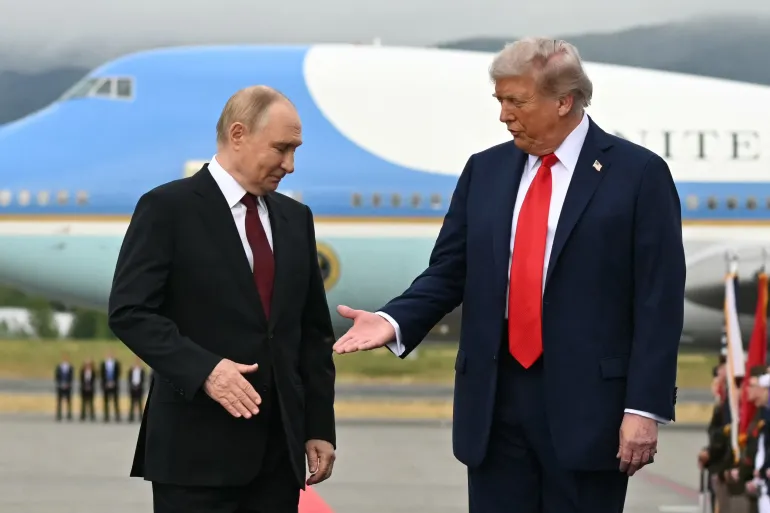
Kremlin has confirmed that Russian President, Vladimir Putin has been invited by U.S. President, Donald Trump to join the “Board of Peace.”
This newly established international body is tasked with overseeing the reconstruction and governance of Gaza following the implementation of a comprehensive ceasefire plan.
Kremlin spokesperson, Dmitry Peskov stated that Moscow is currently “studying the proposal” and seeking to clarify the specific “nuances” of the invitation through diplomatic channels with Washington.
The Board of Peace is the cornerstone of President Trump’s 20-point plan to resolve the Gaza conflict, which has been under a fragile ceasefire since October 2025.
The board is designed to provide strategic oversight and mobilize international resources as Gaza transitions from war to development.
While its primary focus is currently the Palestinian enclave, the organization’s charter suggests a much broader mandate, aiming to serve as a “bold new approach” to resolving global conflicts, which some analysts see as a potential rival to the United Nations Security Council.
The invitation to Vladimir Putin is particularly striking given the ongoing and brutal war in Ukraine, which is nearing its four-year anniversary.
Critics argue that including the Russian leader in a global peace-building body while he continues an invasion of a sovereign neighbor is contradictory.
However, proponents of the move suggest that involving major world powers is essential for regional stability in the Middle East, where Russia maintains significant influence and has recently strengthened ties with actors like Iran.
In addition to Russia, several other nations have been invited to join the board, including Turkey, Egypt, Canada, and Kazakhstan.
Some leaders, such as Hungarian Prime Minister Viktor Orbán and Belarusian President Alexander Lukashenko, have already signaled their acceptance. The structure of the board has also drawn attention for its “elite membership” model; according to reports, while leaders are invited for three-year terms, countries can secure a permanent seat on the board by contributing $1 billion toward Gaza’s reconstruction efforts.
The administration has already named a “founding executive board” to manage the day-to-day operations of the initiative.
This group includes high-profile figures such as U.S. Secretary of State Marco Rubio, Jared Kushner, and former British Prime Minister Tony Blair.
This executive body will work alongside a committee of Palestinian technocrats who are intended to handle the local administration of Gaza, theoretically bypassing the political influence of both Hamas and the Fatah-dominated Palestinian Authority.
Despite the ambitious scope of the plan, the initiative faces significant hurdles and domestic opposition within Israel.
Prime Minister Benjamin Netanyahu’s office has expressed dissatisfaction with the composition of the executive board, claiming it was not properly coordinated with the Israeli government. Furthermore, many international observers remain skeptical of whether a body led by a select group of world leaders and wealthy donors can achieve the “legitimacy” required to maintain lasting peace in a region defined by decades of deep-seated resistance and conflict.