



ATM Fees Fail to Curb Cash Dependence as Nigerians Withdraw N36.34tn in 6 Months
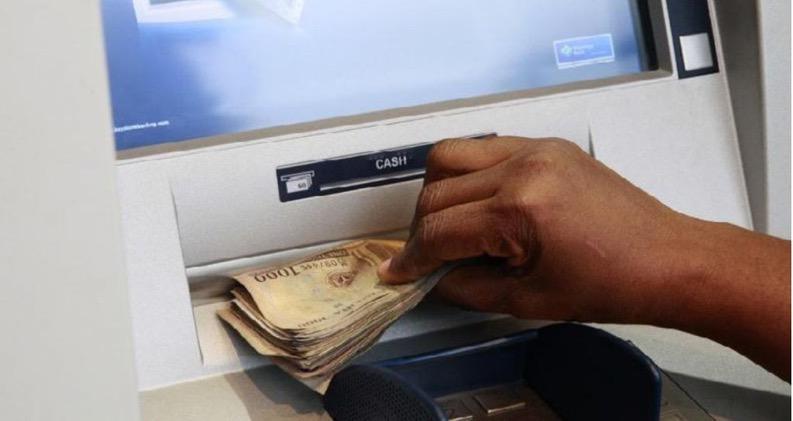
Nigerians relied increasingly on cash transactions between January and June 2025, withdrawing N36.34tn from automated teller machines nationwide, despite higher withdrawal charges introduced by the Central Bank of Nigeria, according to official banking data.
Figures contained in the CBN’s quarterly statistical bulletin show that the value of ATM withdrawals in the first half of 2025 almost tripled the N12.21tn recorded in the same period of 2024.
The jump represents a year-on-year increase of N24.13tn, or 197.66 per cent, highlighting a sustained appetite for physical cash even as regulators push for wider adoption of electronic payments.
The data further revealed that Nigerians carried out 858.80 million ATM transactions during the period, compared with 496.47 million transactions a year earlier. The additional 362.34 million withdrawals reflect a 72.98 per cent rise in usage volumes.
The surge occurred shortly after the apex bank introduced a revised ATM fee structure in March 2025. Under the policy, customers withdrawing from another bank’s ATM now pay N100 for every N20,000 withdrawn.
Additional surcharges of up to N500 per N20,000 apply to machines located at offsite locations such as shopping centres, fuel stations and airports. The policy also scrapped the previous provision that allowed customers three free monthly withdrawals on other banks’ ATMs.
Explaining the changes in a circular, the CBN stated, “In response to rising costs and the need to improve efficiency of Automated Teller Machine (ATM) services in the banking industry, the Central Bank of Nigeria has reviewed the ATM transaction fees prescribed in Section 10.7 of the extant CBN Guide to Charges by Banks, Other Financial and Non-Bank Financial Institutions, 2020 (the Guide).”
The regulator added, “This review is expected to accelerate the deployment of ATMs and ensure that appropriate charges are applied by financial institutions to consumers of the service. Accordingly, banks and other financial institutions are advised to apply the following fees with effect from March 1, 2025.”
Quarterly breakdowns show that ATM activity gathered momentum as the year progressed. Withdrawals in the first quarter of 2025 reached N15.97tn, compared with N5.46tn in the corresponding quarter of 2024, a rise of about 192.9 per cent. Transaction volumes during the period climbed from 210.66 million to 411.42 million, representing 95.3 per cent growth.
The second quarter recorded even stronger figures. Between April and June 2025, ATM withdrawals totalled N20.36tn, more than triple the N6.75tn recorded in the same months of 2024. Transaction volumes increased from 285.81 million to 447.39 million, a 56.5 per cent rise.
Monthly data underscored the consistent expansion. January withdrawals stood at N4.81tn, more than double the N2.15tn recorded in January 2024. February transactions grew to N5.40tn from N1.72tn a year earlier, while March figures reached N5.76tn compared with N1.60tn in March 2024. The upward pattern continued through April, May and June.
Although point-of-sale channels still process far larger values overall, ATM withdrawals expanded at a faster rate. POS transaction values rose from N85.91tn in the first half of 2024 to N147.20tn in the same period of 2025, while volumes grew from 6.40 billion to 7.72 billion transactions.
In an online Frequently Asked Questions document, the CBN clarified that banks are not permitted to charge customers above the approved fees, although institutions may set lower charges based on internal strategies.
The bank warned that any institution found violating the directive would face sanctions, including cases where customers are forced to withdraw amounts below N20,000 per transaction despite having sufficient account balances.
The regulator advised customers to minimise fees by using their own bank’s ATMs and to consider alternatives such as mobile banking, electronic transfers and POS payments.
The revised charges have, however, drawn criticism from consumer groups and financial analysts. FinTech Executive and Techpreneur, Tope Dare, argued that the policy would disproportionately affect low-income earners.
“This policy ultimately favours those who can afford to withdraw larger sums, while the average Nigerian, who withdraws in smaller amounts, bears the brunt. For many low-income earners and small business owners, withdrawing N5,000 or N10,000 at a time is a daily necessity. Now, they face unfair charges that wealthier Nigerians can easily avoid,” he said.
Civil society organisation Socio-Economic Rights and Accountability Project has also challenged the policy in court, describing it as unfair and exploitative. The Nigeria Labour Congress similarly condemned the fee hike.
In a statement signed by TUC President, Festus Osifo, and Secretary-General, Nuhu Toro, the union said, “Our attention has been drawn to a circular from the CBN announcing an increase in ATM transaction fees, effective March 1, 2025. We say unequivocally: enough is enough. The Nigerian workers and the general public have endured relentless economic hardship under this administration.”
The statement added, “Every day brings a new burden—higher taxes, rising electricity tariffs, exorbitant call and data charges, and now, increased ATM fees. This government has failed to cushion the effects of its harsh economic policies, and the patience of Nigerians is wearing thin.”
Not all stakeholders oppose the adjustment. The Chairman of the Bank Customers Association of Nigeria, Dr. Uju Ogubunka, said higher fees were inevitable given current economic realities, though he questioned the scale of the increase.
He said, “It should have been expected. Other places have increased their fees. The only thing one can talk about is the extent of the increase. Electricity, telephones, and even the open market have recorded increases in prices. The issue should not be the increase but the extent of it. Is it reasonable? Is it affordable at this point in time?”
He added, “It is not only banking services that are increasing fees. If you ask me, I will say let’s move on. Someday, these things will adjust themselves.”
In a related move aimed at improving consumer confidence, the CBN in October 2025 directed banks to refund customers for failed ATM transactions within 48 hours. The directive also set new standards for ATM availability, requiring banks to deploy at least one machine for every 5,000 active cards, with full compliance expected by 2028.
Meanwhile, monetary data indicate that the preference for physical cash remains strong. Recent statistics showed that Nigerians withdrew a net N264.48bn from banks in November 2025, pushing total currency held outside the banking system to N4.91tn, up from N4.65tn in October.
The growing volume of cash outside banks presents challenges for monetary authorities. Analysts warn that high levels of out-of-bank cash reduce the effectiveness of monetary policy, limit banks’ liquidity and encourage informal transactions beyond regulatory oversight.
Despite ongoing efforts to deepen electronic payment adoption, the latest figures suggest that cash continues to play a dominant role in everyday economic activity, raising questions about the effectiveness of recent policy measures designed to shift Nigerians toward a cashless economy.