

The Man Martin Luther King Jr., Trajectory that Redefined Freedom
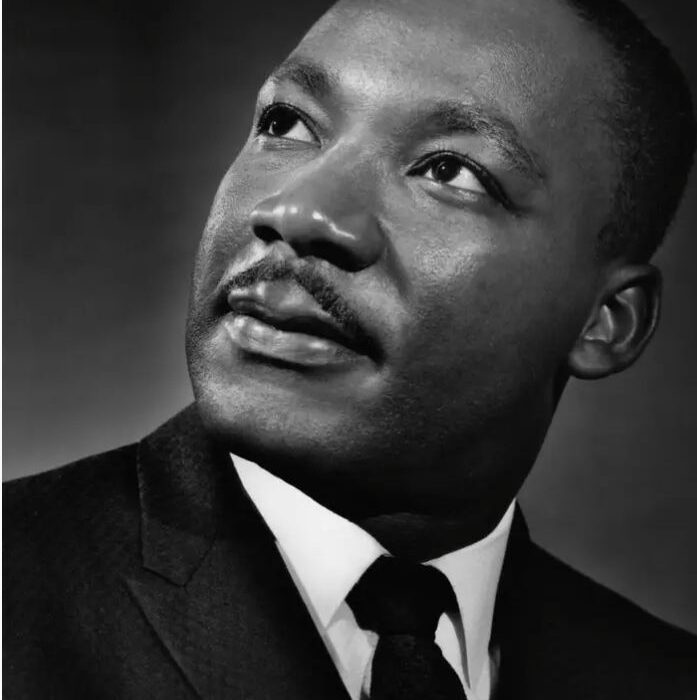
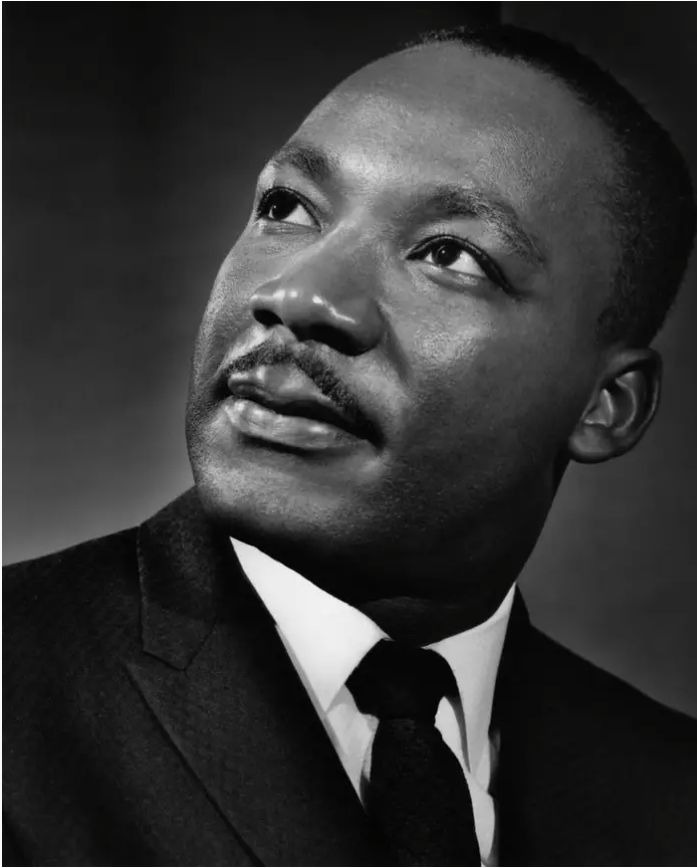 The Man Martin Luther King Jr., Trajectory that Redefined Freedom
Martin Luther King Jr. was born on January 15, 1929, into a lineage of Baptist ministers in Atlanta, Georgia. Growing up in the segregated South, he experienced the sting of “Jim Crow” laws firsthand, which shaped his early understanding of systemic inequality.
His education at Morehouse College and later at Boston University provided him with a deep theological and philosophical foundation, blending Christian ethics with the activist principles he would later use to challenge the American status quo.
King’s rise to national prominence began in 1955 with the Montgomery Bus Boycott. Following the arrest of Rosa Parks, King was chosen to lead the protest, which lasted 381 days and resulted in a Supreme Court ruling that declared segregated buses unconstitutional.
This victory proved that organized, nonviolent collective action could dismantle entrenched systems of oppression, and it established King as the primary spokesperson for the burgeoning Civil Rights Movement.
Central to King’s identity as a symbol of freedom was his commitment to non-violent resistance. Inspired by the teachings of Jesus and the successful tactics of Mahatma Gandhi, King argued that “moral ends” could only be achieved through “moral means.” He taught his followers to meet physical force with “soul force,” believing that the spectacle of peaceful protesters being met with violence would eventually prick the conscience of the white American majority.
In 1963, King helped organize the March on Washington for Jobs and Freedom, where he delivered his iconic “I Have a Dream” speech. Standing before the Lincoln Memorial, he spoke not just of Black grievances, but of a shared American future. This moment solidified him as a symbol of freedom because he framed the Civil Rights Movement as the ultimate fulfillment of the American Dream, calling on the nation to live up to the “true meaning of its creed.”
King’s leadership was instrumental in the passage of the Civil Rights Act of 1964 and the Voting Rights Act of 1965. These were not just legal victories; they were the dismantling of the legal architecture of white supremacy.
By securing the right to vote and ending legal segregation in public spaces, King helped Black Americans transition from a state of “second-class citizenship” toward true political and social agency.
In 1964, King was awarded the Nobel Peace Prize, which elevated the American struggle for Black freedom to a global stage. This recognition signaled that the fight against racism in the United States was part of a broader international movement for human rights and decolonization. As a symbol, King represented the universal hope that oppressed people everywhere could achieve liberation through dignity and persistent struggle.
While imprisoned in 1963, King wrote his “Letter from Birmingham Jail,” one of the most important documents of the 20th century. In it, he defended the urgency of direct action and criticized those who told Black Americans to “wait” for a more convenient season for freedom. This letter remains a cornerstone of his legacy, asserting that “injustice anywhere is a threat to justice everywhere,” a sentiment that continues to inspire freedom fighters worldwide.
Toward the end of his life, King’s vision for freedom expanded to include economic justice. He realized that the right to sit at a lunch counter meant little if one could not afford to buy a meal. He launched the Poor People’s Campaign, aiming to address the systemic poverty that afflicted people of all races. This shift showed that for King, “freedom” was not just the absence of segregation, but the presence of economic dignity and opportunity.
On April 4, 1968, Martin Luther King Jr. was assassinated in Memphis, Tennessee. His death at the age of 39 turned him into a martyr for the cause of racial justice. The shock of his assassination led to an outpouring of grief and riots across the country, but it also cemented his status as a permanent symbol of the high price of progress. His sacrifice became a rallying cry for future generations to continue the “unfinished work” of the movement.
Today, Martin Luther King Jr. is remembered as a symbol of Black freedom because he dared to imagine a world where people are judged “by the content of their character rather than the color of their skin.” His life serves as a blueprint for social change, proving that a single voice, backed by moral clarity and a committed community, can alter the course of history.
He remains the standard-bearer for the ongoing pursuit of a more perfect and inclusive union.