


Uganda’s Bobi Wine Whisked to Unknown Location in Army Helicopter, Says Party
Uganda’s Bobi Wine Whisked to Unknown Location in Army Helicopter, Says Party
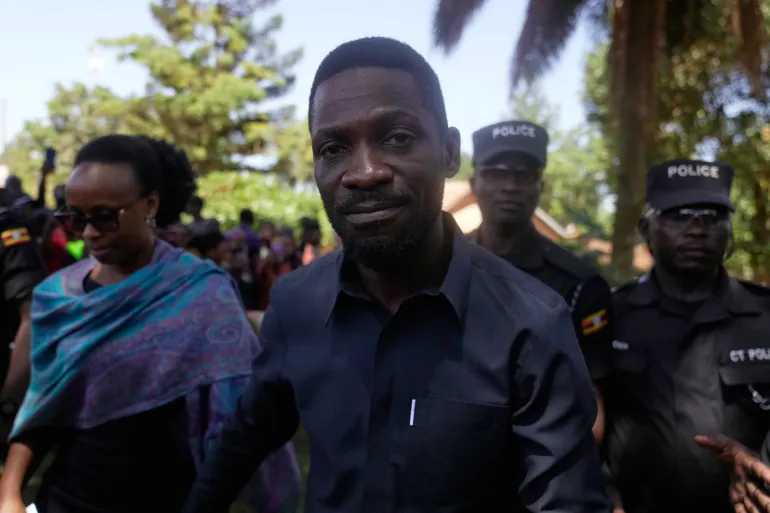
Uganda’s National Unity Platform (NUP) reported that its leader and presidential candidate, Robert Kyagulanyi Ssentamu popularly known as Bobi Wine was seized from his home and flown to an unknown location in a military helicopter.
This incident occurred just one day after a tense and highly contested presidential election, as the country awaited the final results.
The arrest follows a period of intense restriction for the opposition leader, whom the NUP claimed had been placed under effective house arrest immediately following the close of polls. While military and police forces had surrounded his residence in Kampala, official police spokespersons initially claimed they were unaware of any formal house arrest, describing the security presence as a “preventative measure” to maintain order.
The election took place under a nationwide internet blackout, which the government claimed was necessary to prevent misinformation and potential incitement. However, the opposition and international observers criticized the move as a tactic to mask electoral fraud. Early results released by the Electoral Commission showed incumbent President Yoweri Museveni with a commanding lead of over 76 percent, while Bobi Wine trailed with approximately 20 percent of the vote.
The political atmosphere in Uganda has remained volatile, with reports of violence emerging from various parts of the country. In the town of Butambala, clashes between protesters and security forces reportedly left at least seven people dead.
Human rights organizations have characterized the election cycle as being marred by widespread repression, intimidation, and the use of excessive force against opposition supporters.
Bobi Wine’s disappearance into military custody has sparked deep concern among his followers and the international community regarding his safety and the transparency of the democratic process.
As Museveni seeks to extend his 40-year rule into a seventh term, the removal of his primary challenger from the public eye has intensified fears of further unrest and a deepening political crisis in the East African nation.