
Going Down Memory Lane on Iran, US Spat
Going Down Memory Lane on Iran, US Spat
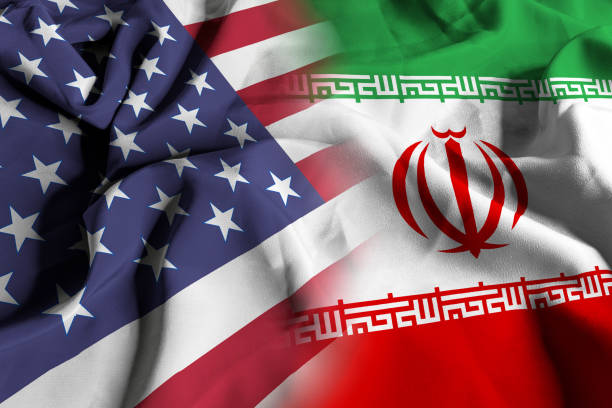
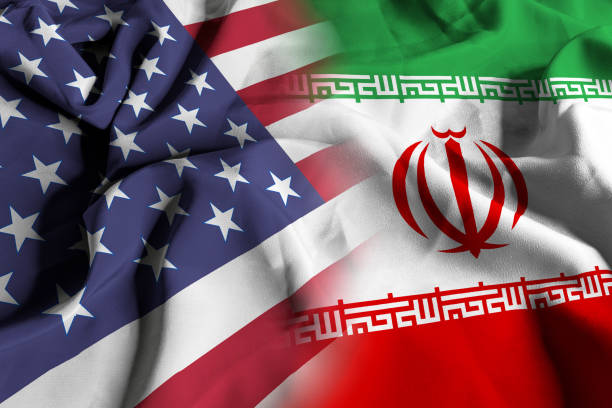
The transformation of the United States and Iran from strategic partners into bitter adversaries is a historical saga defined by a shift from mutual admiration to deep-seated suspicion. In the early 20th century, Iran, then known as Persia, saw the United States as a “Third Force” that could protect it from the colonial ambitions of Great Britain and Russia. Unlike the European powers, America had no history of imperialism in the Middle East, leading many Iranian intellectuals to believe that Washington was a disinterested friend that could provide technical aid and economic modernization without demanding political control or territory in return.
This era of optimism came to a crashing halt in 1953, a year that many historians cite as the true birth of Iranian anti-Americanism. Prime Minister Mohammad Mossadegh, a staunch nationalist, had legally moved to nationalize the Iranian oil industry, which had been under the exploitative control of the British for decades. In response, the CIA and British intelligence orchestrated a secret coup known as Operation Ajax to overthrow Mossadegh and restore the absolute power of the monarch, Mohammad Reza Pahlavi. This intervention proved that the U.S. was no longer a disinterested observer, but a power willing to subvert democracy to secure oil and contain Soviet influence.
Following the coup, the Shah became the centerpiece of American foreign policy in the Persian Gulf for the next quarter-century. He was transformed into the region’s “policeman,” receiving billions of dollars in advanced American weaponry, including the latest fighter jets and military technology. In exchange, the Shah ensured a steady flow of oil to the West and acted as a strategic barrier against communism. However, this close embrace meant that the U.S. was inextricably linked to the Shah’s domestic policies, which grew increasingly autocratic and out of touch with the traditional and religious values of the Iranian people.
While the Shah modernized the country’s infrastructure and expanded women’s rights, his secret police, the SAVAK, became notorious for the torture and disappearance of political dissidents. Because the United States provided the training and equipment for the Shah’s security forces, the Iranian public began to view Washington as the primary architect of their suffering. By the late 1970s, a broad coalition of secularists, socialists, and Islamists began to organize against the monarchy, fueled by a narrative that the Shah was a “puppet” whose strings were being pulled by the White House.
The tension finally exploded in 1979 during the Islamic Revolution, which saw the Shah flee into exile and the return of the exiled cleric Ayatollah Ruhollah Khomeini. This was not just a change in government; it was a total ideological pivot that placed anti-Americanism at the very core of the new Islamic Republic’s identity. Khomeini branded the United States “The Great Satan,” arguing that American “Westoxification” was a plague on Islamic culture. The revolution effectively dismantled decades of U.S. strategic planning in the Middle East overnight, turning a key ally into a revolutionary threat.
The diplomatic relationship was officially destroyed in November 1979 when radical Iranian students stormed the U.S. Embassy in Tehran. Outraged that the U.S. had allowed the deposed Shah to enter America for cancer treatment, the students took 52 Americans hostage and held them for 444 days. The images of blindfolded American diplomats broadcast on nightly news programs traumatized the American public and led President Jimmy Carter to sever all diplomatic ties in April 1980. This event created a psychological scar in the American consciousness that has dictated policy toward Iran for over 40 years.
During the 1980s, the rivalry moved from the diplomatic sphere to the battlefield during the Iran-Iraq War. Fearful that a victorious Iran would export its revolution across the Middle East, the United States provided intelligence, economic credit, and even chemical weapon precursors to Saddam Hussein’s Iraq. For Iran, the sight of the U.S. backing the man who was raining missiles on their cities and using gas on their soldiers solidified the belief that America would stop at nothing to destroy their nation. This era transformed the conflict from a political dispute into a deep, existential blood feud.
The confrontation reached a violent peak in the waters of the Persian Gulf during the “Tanker War” of the late 1980s. As both sides attacked oil tankers to disrupt each other’s economies, the U.S. Navy and the Iranian Revolutionary Guard engaged in direct naval combat. The most tragic moment occurred in July 1988, when the USS Vincennes mistakenly shot down an Iranian civilian airliner, Iran Air Flight 655, killing all 290 people on board. While the U.S. called it a tragic mistake, the Iranian government viewed it as a deliberate massacre intended to force them to end the war with Iraq.
In the 21st century, the focus of the “start” of the conflict shifted toward Iran’s nuclear program and its regional influence. After the 9/11 attacks, despite some brief cooperation against the Taliban, President George W. Bush labeled Iran as part of an “Axis of Evil.” This rhetoric, combined with the discovery of secret nuclear enrichment sites, led to a decade of crippling economic sanctions. The U.S. began to view Iran not just as a revolutionary state, but as a nuclear-threshold power that threatened the existence of Israel and the stability of global energy markets.
Today, the rivalry has evolved into a sophisticated “Gray Zone” war involving cyberattacks, proxy militias, and maritime seizures. The 2015 Nuclear Deal briefly offered a path toward de-escalation, but the subsequent U.S. withdrawal and the “maximum pressure” campaign showed how fragile that peace truly was. The conflict that started with a dispute over oil in 1953 has become a permanent feature of global politics, driven by a cycle where each side views the other’s actions as proof of inherent hostility.