
Thomas Sankara: Man Who Dared to Invent the Future.
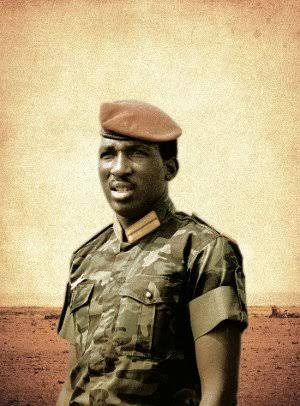
Thomas Sankara: Man Who Dared to Invent the Future.
Thomas Sankara’s presidency, though lasting only four years, remains one of the most ambitious experiments in African self-determination. When he took power in 1983, the nation then known as Upper Volta was a fractured, impoverished former colony heavily dependent on foreign aid.
Sankara’s vision was built on the radical premise that dignity could not be imported; it had to be grown from within. By renaming the country Burkina Faso merging local languages to mean “The Land of Upright People”he signaled a psychological break from the colonial past and a commitment to national integrity.
At the heart of his “vision” was a fierce pursuit of economic independence. Sankara understood that as long as a nation relied on the charity of its former colonizers, it would never be truly sovereign. He famously rejected the aid of the International Monetary Fund (IMF) and the World Bank, viewing their loans as a form of modern-day slavery. Instead, he mobilized the peasantry to nationalize land and mineral wealth. This shift was not merely symbolic; within just a few years, Burkina Faso doubled its grain production, effectively ending the cycle of famine that had plagued the Sahel for generations.
Sankara’s environmentalism was decades ahead of its time. Recognizing that the Sahara Desert was encroaching southward, he launched the “People’s Harvest of Forest Nurseries.” He successfully mobilized millions of citizens to plant over 10 million trees, creating a “Green Belt” to stop desertification. This was part of a larger philosophy that the Burkinabé people were the primary stewards of their land, and that environmental restoration was a necessary component of economic survival and public health.
On the social front, Sankara was a trailblazer for gender equality in a deeply conservative society. He argued that the revolution could not succeed if half the population was held back. He outlawed female genital mutilation, forced marriages, and polygamy, while simultaneously appointing women to high-ranking cabinet positions. In a famous act of solidarity, he declared a “Day of Solidarity with Housewives,” where men were encouraged to go to the market and take over household chores to experience the labor traditionally forced upon women.
His commitment to public health was equally revolutionary. During a period of fifteen days, his administration orchestrated a massive vaccination campaign that reached 2.5 million children, protecting them against measles, yellow fever, and meningitis. This feat was accomplished without the vast resources of Western NGOs, relying instead on a grassroots network of “Committees for the Defense of the Revolution” (CDRs). His government also prioritized literacy, launching campaigns that saw the national literacy rate jump from 13% to over 70% in record time.
The “Vision” also demanded a complete overhaul of the ruling class’s lifestyle. Sankara believed that leaders should live like the people they represent. He sold off the government’s fleet of Mercedes-Benz luxury cars and replaced them with the Renault 5, the cheapest car available in the country. He refused to allow his portrait to be hung in public buildings, stating that there were “seven million Thomas Sankaras.” His own salary was the equivalent of roughly $450 a month, and his most valuable possessions were a guitar, four bicycles, and a fridge.
However, Sankara’s radicalism earned him powerful enemies, both at home and abroad. His refusal to pay the “odious” colonial debts inherited from previous regimes angered the French government and European bankers. Domestically, his centralized power and the sometimes heavy-handed tactics of the CDRs alienated traditional tribal leaders and the middle class. His anti-imperialist rhetoric at the United Nations and the Organization of African Unity made him a target for Western intelligence agencies who feared his influence would spread across the continent.
The tragic end to this vision came on October 15, 1987. Sankara was betrayed by his closest friend and comrade-in-arms, Blaise Compaoré. During a meeting of the National Council of the Revolution, a group of armed soldiers stormed the building. Realizing the end was near, Sankara reportedly stood up and told his colleagues to stay inside, saying he was the one the gunmen wanted. He stepped out with his hands raised to save his staff, but he was immediately riddled with bullets. His body was dismembered and buried in a shallow, unmarked grave.
Following the assassination, Compaoré seized power and immediately began a process he called “rectification.” This involved dismantling almost all of Sankara’s self-sufficiency programs, re-aligning with French interests, and taking on the very foreign debt Sankara had fought so hard to avoid. For 27 years, Compaoré ruled Burkina Faso with an iron fist, attempting to erase Sankara’s name from history books and public memory.
However, the memory of the “Upright Man” lived on in the hearts of the youth, who eventually ousted Compaoré in a 2014 uprising.
Thomas Sankara’s legacy is not defined by his death, but by the blueprint he left for African autonomy. He proved that a small, landlocked nation could achieve food security, environmental restoration, and social progress without bowing to external powers.
Today, his image remains a symbol of resistance across the globe. He is remembered as a man who dared to invent the future, showing that a leader’s greatest tool is not his weapons or his wealth, but his integrity and his love for his people.