I Don’t Need International Law, Morality, Only My Mind Can Stop Me, Says Trump
I Don’t Need International Law, Morality, Only My Mind Can Stop Me, Says Trump
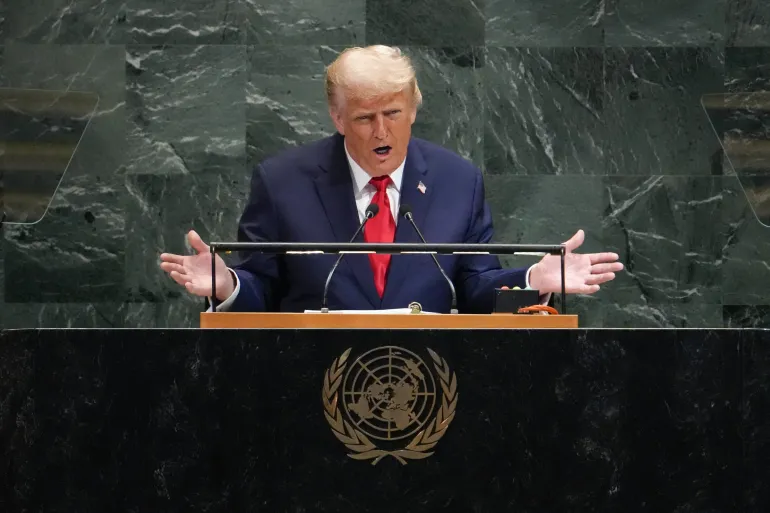
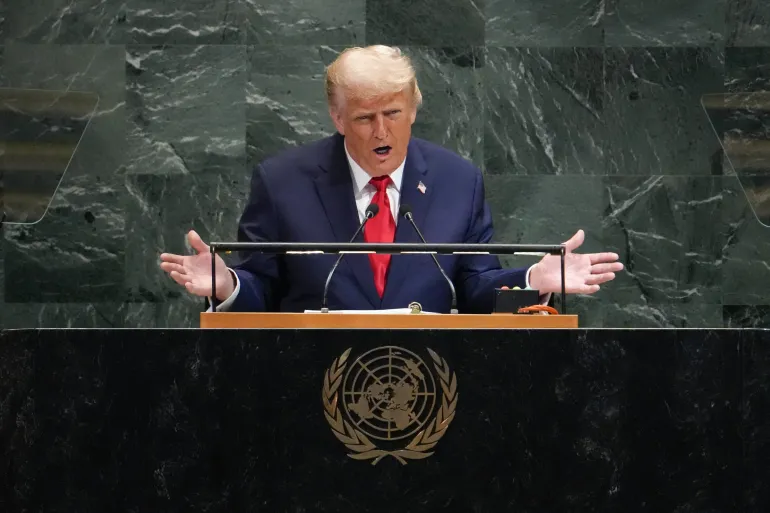
President Donald Trump has explicitly dismissed the necessity of international law in guiding his administration’s actions.
In an exclusive interview with the New York Times published on January 8, 2026, the President stated point-blank, “I don’t need international law, “signaling a definitive shift toward a unilateral “Sovereignty First” foreign policy.
When pressed by reporters on whether there are any legal or ethical boundaries that constrain his authority particularly regarding military interventions and territorial ambitions the President pointed to his own internal judgment as the ultimate arbiter.
He asserted, “My own morality. My own mind. It’s the only thing that can stop”,adding that while he is “not looking to hurt people,” he believes his personal conviction takes precedence over global treaties.
These remarks follow a week of unprecedented geopolitical activity, most notably the launch of “Operation Absolute Resolve,”a lightning military strike on January 3, 2026, that toppled the government of Nicolás Maduro in Venezuela.
While the administration framed the mission as a “law enforcement operation” against narco-terrorism, international legal experts and the United Nations have condemned it as a violation of the UN Charter, arguing it sets a dangerous precedent for the use of force against sovereign nations.
Further cementing this isolationist stance, the White House issued a Presidential Memorandum on January 7, 2026, directing the United States to withdraw from 66 international organizations.
This massive rollback includes 31 United Nations entities and major climate treaties like the UNFCCC and the IPCC. The administration defended the move by claiming these bodies promote “radical agendas” and “globalist” interests that waste American taxpayer dollars and infringe upon U.S. sovereignty.
The President’s interview also touched on his renewed interest in gaining control of Greenland, where he emphasized that “ownership” is psychologically and strategically superior to any lease or treaty.
He argued that formal ownership provides a level of security and control that “just signing a document” cannot offer. This stance has heightened tensions with European allies, who view the rhetoric as a threat to the territorial integrity of the Danish Realm and the stability of the Arctic region.
Domestically, the President’s comments have ignited a firestorm of debate over the limits of executive power. While supporters cheer the move as a long-overdue reclamation of American independence, critics and human rights groups warn that dismissing international law in favor of “personal morality” borders on authoritarianism.
Legal scholars have noted that such a philosophy effectively places the Presidency above the established rules that have governed global relations since the end of World War II.
As the U.S. moves to finalize its exit from dozens of global institutions, the international community is left to grapple with an increasingly unpredictable America. With the President maintaining that his own mind is the only true check on his power, the coming months of 2026 likely represent a turning point in history where the traditional “rule of law” is replaced by a new era of raw national interest and unilateral action.