
Nigeria’s Civil Service Goes Digital as Paper Files Become History
Nigeria’s long-running struggle with bulky files, missing memos and slow bureaucratic processes has officially come to an end, as the Federal Government confirmed that all 31 federal ministries and departments are now operating fully on digital platforms.
The announcement, made on Wednesday night in Abuja, signals the completion of a nationwide shift to a paperless civil service, an achievement that places Nigeria among African countries pushing aggressively toward digital governance.
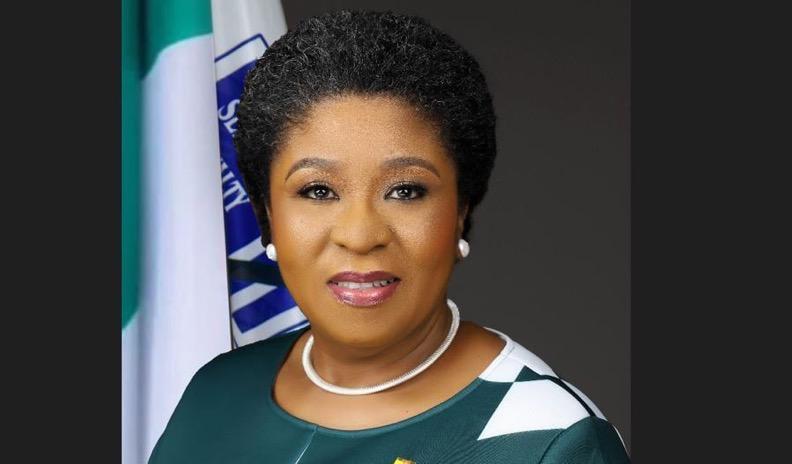
Speaking at the Paperless Civil Service Gala and Awards Night, the Head of the Civil Service of the Federation (HCSF), Mrs Didi Walson-Jack, described the development as a turning point in public sector reform, saying government business has finally moved beyond manual paperwork into a technology-driven system.
For decades, digitalisation in the civil service had remained more of an aspiration than a reality. According to Walson-Jack, that era is over.
“Digitalisation, which for many years sounded like a good idea we would get to ‘one day,’ has finally arrived.
“I am delighted that we can now speak about it not as a concept, but as reality.”
She explained that the transformation was not an overnight success but the outcome of years of planning and continuity across administrations.
She acknowledged her predecessors, Mrs Winifred Oyo-Ita and Dr Folasade Yemi-Esan, for laying a solid foundation through the Federal Civil Service Strategy and Implementation Plans covering 2017–2020 and 2021–2025.
When Walson-Jack assumed office in August 2024, the task ahead was daunting. Only three ministries had fully embraced digital operations at the time.
To meet the 2025 deadline, she said the service adopted an emergency-style approach, setting up dedicated “war rooms” to fast-track implementation and enforce accountability across ministries.
Beyond policy declarations, the reforms have produced measurable outcomes. Over 100,828 official government email accounts have been created, a move the HCSF said has saved Nigeria billions of naira that would otherwise have been spent on licensing fees.
She also highlighted the introduction of Service-Wise GPT, an artificial intelligence platform trained on public service rules, which has already recorded more than 25,000 interactions, helping civil servants access information faster.
In addition, the Online Compendium of Circulars has eliminated the long-standing practice of physically searching for government directives.
In a further push to modernise the workforce, Walson-Jack announced the launch of the Federal Civil Service Online Academy, designed to update staff skills and align training with digital governance demands.
Addressing fears often associated with automation, she stressed that the paperless initiative was never about job losses but about efficiency and relevance in a rapidly changing world.
She added that the entire transition followed the Nigeria First policy, with all digital solutions developed locally to strengthen the economy and showcase indigenous expertise.
“This is a defining moment. Countries that fail to go digital with their Public Services are not merely slow; they are uncompetitive and increasingly irrelevant,” she said.
“Nigeria is now setting a bold example for African public services.”
With the final phase completed, the Federal Government says the challenge ahead is sustainability, ensuring that the digital systems remain secure, efficient and adaptable. For now, however, the era of paper-stacked offices in Nigeria’s federal civil service has officially been consigned to history.