
Dangote Calls Out Farouk, NMDPRA for Living Above His Means, Compromising Local Refineries
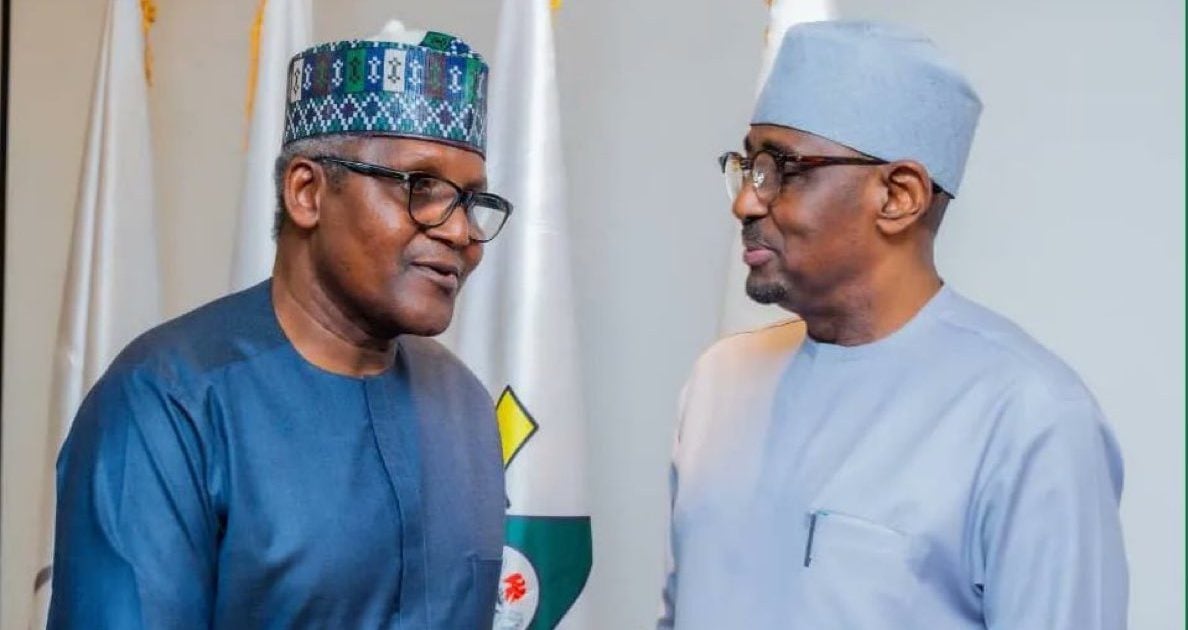
Africa’s richest man and industrialist, Aliko Dangote, has raised a fresh storm in Nigeria’s energy sector after making a serious allegation against the leadership of the Nigerian Midstream and Downstream Petroleum Regulatory Authority (NMDPRA), calling for a thorough investigation into the personal finances of its chief executive.
Dangote alleged that the regulator’s head, Mallam Farouk Ahmed, reportedly spent about **$5 million** to educate four of his children at secondary school level in Switzerland.
According to the billionaire businessman, such an expenditure raises fundamental questions about transparency, accountability, and the source of income available to a public official occupying a highly sensitive regulatory position.
Speaking during an interaction with journalists at the Dangote Petroleum Refinery in Lagos, Dangote said the allegation should not be treated as a personal attack but as a matter of national interest that demands urgent scrutiny.
He stressed that regulatory agencies must operate above suspicion, especially in a sector as strategic as oil and gas, which directly affects the economy and the daily lives of millions of Nigerians.
Dangote further linked the allegation to what he described as persistent regulatory actions that undermine local refining and promote fuel importation.
He argued that policies allegedly implemented by the NMDPRA have placed unnecessary obstacles before domestic refiners, despite the federal government’s long-standing objective of achieving energy self-sufficiency.
According to him, such actions contradict Nigeria’s economic interests and discourage long-term private investment.
The businessman urged relevant anti-corruption and oversight institutions to independently verify the claims by examining the official’s declared income, assets, and financial records.
He maintained that a transparent investigation would either clear the air or expose wrongdoing, thereby strengthening public confidence in regulatory institutions.
The allegation has since generated widespread public debate, with civil society organisations and social commentators demanding accountability.
Many Nigerians have questioned how a public servant could afford such costly foreign education without alternative sources of income, while others have called for restraint until proper investigations are concluded.
As of the time of filing this report, the NMDPRA leadership has not issued a detailed response addressing the allegation.
Observers say silence from the regulator has only intensified public interest and pressure for clarity.
Industry analysts note that the controversy highlights deeper tensions between private sector investors and regulators in Nigeria’s petroleum industry.
They argue that resolving the matter transparently will be crucial, not only for restoring trust but also for ensuring a stable and investor-friendly regulatory environment.
With the spotlight now firmly on the petroleum regulator, many Nigerians are watching closely to see whether the call for investigation will translate into concrete action or fade amid competing national concerns. affects the economy and the daily lives of millions of Nigerians.
Dangote further linked the allegation to what he described as persistent regulatory actions that undermine local refining and promote fuel importation. He argued that policies allegedly implemented by the NMDPRA have placed unnecessary obstacles before domestic refiners, despite the federal government’s long-standing objective of achieving energy self-sufficiency.
According to him, such actions contradict Nigeria’s economic interests and discourage long-term private investment.
The businessman urged relevant anti-corruption and oversight institutions to independently verify the claims by examining the official’s declared income, assets, and financial records.
He maintained that a transparent investigation would either clear the air or expose wrongdoing, thereby strengthening public confidence in regulatory institutions.
The allegation has since generated widespread public debate, with civil society organisations and social commentators demanding accountability.
Many Nigerians have questioned how a public servant could afford such costly foreign education without alternative sources of income, while others have called for restraint until proper investigations are concluded.
As of the time of filing this report, the NMDPRA leadership has not issued a detailed response addressing the allegation.
Observers say silence from the regulator has only intensified public interest and pressure for clarity.
Industry analysts note that the controversy highlights deeper tensions between private sector investors and regulators in Nigeria’s petroleum industry.
They argue that resolving the matter transparently will be crucial, not only for restoring trust but also for ensuring a stable and investor-friendly regulatory environment.
With the spotlight now firmly on the petroleum regulator, many Nigerians are watching closely to see whether the call for investigation will translate into concrete action or fade amid competing national concerns.