US Accuses Rwanda of Steering East Africa Toward War Despite Fresh Peace Deal
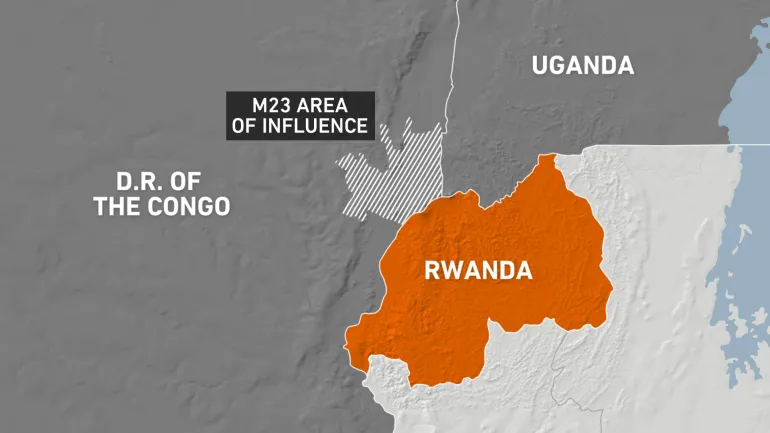
The United States has accused Rwanda of escalating tensions in East Africa through its alleged support for the M23 rebel group in eastern Democratic Republic of Congo (DRC), only days after Kigali and Kinshasa signed a US-brokered peace agreement in Washington.
The deal, endorsed last week at the urging of US President Donald Trump, was expected to mark a turning point in efforts to end nearly 30 years of conflict in eastern Congo. However, renewed hostilities have cast doubt on those hopes.
M23 fighters this week seized the strategic city of Uvira in South Kivu, tightening their grip on territory around the Burundian border.
The capture has given the Rwanda-backed militia control of a critical land crossing, limiting Kinshasa’s ability to receive military assistance from Burundi.
Speaking at a United Nations Security Council briefing on Friday, US Ambassador Mike Waltz sharply criticized Rwanda for what he described as actions that undermine the newly signed peace deal.
“Instead of progress toward peace, as we have seen under President Trump’s leadership in recent weeks, Rwanda is leading the region toward more instability and toward war,” Waltz said.
He added that Washington is “deeply concerned and increasingly disappointed” by the latest surge in violence.
Waltz accused the Rwandan Defence Forces of providing weapons, logistical support and training to M23 fighters, alongside directly participating in combat operations inside Congolese territory.
He estimated that between 5,000 and 7,000 Rwandan troops were involved, with additional reinforcements possibly deployed during the most recent offensive.
According to US intelligence presented at the meeting, M23’s battlefield capabilities now include the use of drones, artillery and surface-to-air missiles equipment far more sophisticated than what the group previously possessed.
The rebel group began its current push earlier this month, intensifying operations in South Kivu. The offensive follows earlier gains in January and February, when M23 seized the major cities of Goma and Bukavu.
The renewed advance has alarmed the United Nations. UN peacekeeping chief Jean-Pierre Lacroix warned that the situation risks spiralling into a broader regional confrontation.
“The offensive has revived the spectre of a regional conflagration with incalculable consequences,” Lacroix told the Security Council.
He cautioned that the developments could lead to “the progressive fragmentation of the Democratic Republic of Congo, particularly its eastern part.”
As international pressure mounts, the future of the recently celebrated peace agreement remains uncertain, with diplomatic efforts intensifying to prevent a wider regional war.