



Cooking Gas Price skyrockets as 5kg Cylinder Hits ₦8,081 in October, Says NBS
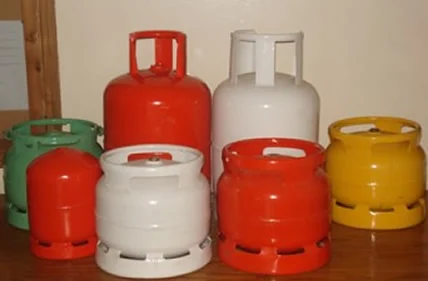
The National Bureau of Statistics (NBS) has reported a sharp rise in the cost of cooking gas as the average price of refilling a 5kg cylinder increased to ₦8,081.75 in October 2025, up from ₦6,395.82 recorded in September.
This represents a significant 26.36 per cent month-on-month increase, highlighting the continued pressure on household energy costs across the country.
According to the NBS’ Cooking Gas Price Watch released on Thursday in Abuja, the October figure also marks a 16.86 per cent year-on-year increase from the ₦6,915.69 recorded in October 2024.
The report shows notable disparities across states, with Borno posting the highest average price for 5kg at ₦8,376.44, followed closely by Yobe at ₦8,357.98 and Ondo at ₦8,340.30.
Conversely, Bauchi recorded the lowest average price at ₦7,051.54, with Ebonyi and Akwa Ibom following at ₦7,744.99 and ₦7,806.31, respectively.
A zonal analysis further showed that the North-West recorded the highest regional average for 5kg at ₦8,188.55, closely trailed by the North-Central at ₦8,153.21.
The South-South posted the lowest average price at ₦7,956.61.
The surge in prices also affected larger cylinders, as the report revealed that the average cost of refilling a 12.5kg cylinder rose by 15.36 per cent, from ₦16,155.09 in September to ₦18,636.77 in October. Compared to October 2024, the price increased by 11.37 per cent, up from ₦16,734.55.
Borno also topped the list for the highest 12.5kg cylinder prices at ₦19,391.57, followed by Yobe at ₦19,339.51 and Ondo at ₦19,289.65.
The lowest prices were recorded in Ebonyi at ₦17,610.88, with Akwa Ibom and Anambra tied at ₦17,783.79.
Regionally, the North-East recorded the highest average price for the 12.5kg refill at ₦18,953.86, followed by the North-West at ₦18,861.70, while the South-South recorded the lowest average at ₦18,207.65.
The continuous rise in LPG prices has raised concerns among consumers and analysts, who warn that the trend could worsen the cost-of-living crisis unless urgent measures are taken to stabilise supply and address foreign exchange challenges impacting the sector.