


Nigeria, Saudi Arabia Sign Strategic Defence Cooperation Agreement
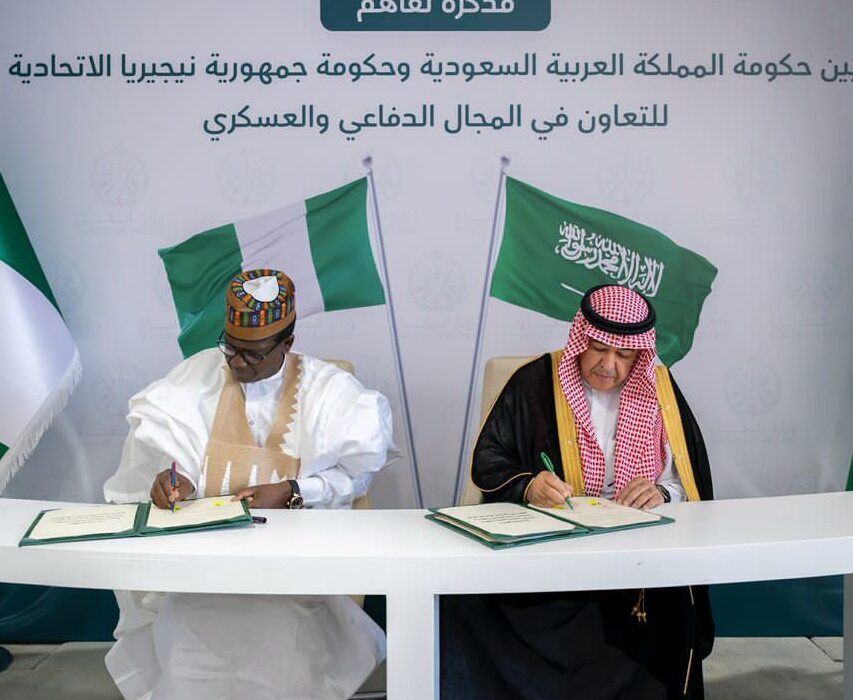
Nigeria and Saudi Arabia have formally entered a new phase of military collaboration with the signing of a comprehensive five-year Memorandum of Understanding (MoU) on defence cooperation, aimed at enhancing bilateral security ties and strengthening Nigeria’s defence capabilities.
The agreement was signed in Abuja by Nigeria’s Minister of State for Defence, Bello Mohammed Matawalle, and Saudi Arabia’s Assistant Minister of Defence for Executive Affairs, Khaled H. Al‑Biyari.
Under the terms of the MoU, the partnership is initially set for five years, with an option to extend for another five years, subject to mutual consent. Either country may withdraw with three months’ notice.
The MoU outlines broad areas of collaboration, including military training and capacity building, joint exercises, intelligence sharing, technical assistance, and operational support.
Both countries also agreed to explore cooperation in defence production, technology transfer, and knowledge exchange, although specifics are to be negotiated under future agreements. Additionally, the pact provides a framework for counter-terrorism cooperation, reflecting Nigeria’s ongoing efforts to address insurgency, organised crime, and internal security challenges.
Officials from both nations hailed the agreement as a significant step in deepening strategic relations. For Nigeria, it represents an opportunity to enhance the professionalism, readiness, and technical capacity of its armed forces, while leveraging Saudi expertise and resources to bolster defence infrastructure.
Analysts note that intelligence sharing and joint operations under the pact could improve Nigeria’s ability to respond to security threats more effectively.
The MoU also has implications for long-term defence industrialisation. By opening pathways for technology transfer and local production, the partnership could support Nigeria’s domestic defence capabilities and reduce reliance on imports.
While the agreement has been welcomed by policymakers, the success of the cooperation will depend on effective implementation, coordination, and consistent follow-through on planned training, exercises, and technology initiatives. Observers caution that measurable security improvements may take time, but the MoU represents a strategic commitment by both nations to deepen military and security collaboration in the coming years.