

Aliko Dangote Named Pioneer Chairman of ECOWAS Business Council
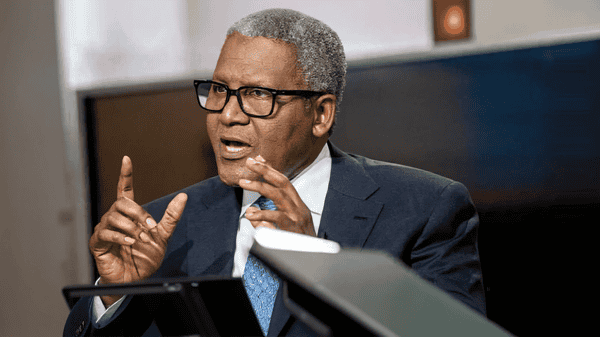
In a landmark move aimed at strengthening private sector engagement and promoting regional economic integration, the Economic Community of West African States (ECOWAS) has appointed Nigerian business magnate, Aliko Dangote as the first-ever chairman of its newly established ECOWAS Business Council (EBC).
The announcement was made during the 95th Ordinary Session of the ECOWAS Council of Ministers in Abuja, where ECOWAS Commission President Omar Touray described Dangote as a “pioneer leader” for the council.
The new platform is designed to provide a structured forum for private sector actors to engage with ECOWAS institutions and member state governments, fostering dialogue, investment, and regional trade.
The ECOWAS Business Council is expected to play a critical role in mobilising private sector investments within West Africa, with a focus on intra-regional capital flow rather than dependence on foreign capital.
The council aims to facilitate collaboration among businesses, encourage joint ventures across member states, and contribute to sustainable economic development in the region.
Dangote, whose Dangote Group spans multiple African countries, was chosen for his extensive experience in regional business operations and his reputation as one of Africa’s most successful industrialists.
ECOWAS officials noted that his leadership is expected to lend credibility to the Council and attract both local and regional investments.
Speaking on the appointment, Touray said, “The ECOWAS Business Council will serve as a vital bridge between the private sector and policy makers. With Mr. Dangote at the helm, we are confident that this platform will drive economic growth, trade, and integration across West Africa.”
Analysts note that while the creation of the council is a significant step, its success will depend on effective implementation, the active participation of member states, and ensuring representation for businesses of all sizes.
If successful, the initiative could boost intra-regional trade, encourage local value chain development, and strengthen economic resilience across West Africa.
The appointment underscores a growing trend in West Africa to leverage homegrown private sector leadership to drive regional economic strategies, particularly in a period marked by economic challenges such as inflation, debt pressures, and trade disruptions.