

ECOWAS Declares Regional State of Emergency Amid Rising Coups, Instability
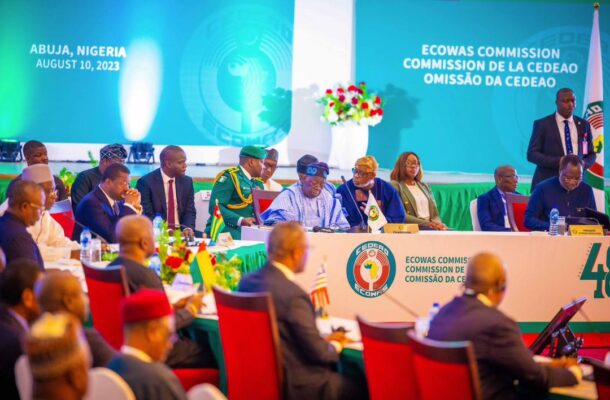
The Economic Community of West African States (ECOWAS) has declared a regional state of emergency in response to a surge of coups, attempted mutinies, and escalating political instability across the subregion.
The announcement was made on Tuesday, December 9, 2025, by ECOWAS Commission President Omar Touray during the bloc’s 55th session of the Mediation and Security Council in Abuja.
Touray stated that the decision was prompted by “a growing erosion of electoral inclusivity and mounting threats to constitutional governance” in member states.
He described recent political disruptions as an existential threat to democracy and regional cohesion, emphasizing that urgent collective action was necessary to safeguard peace and stability in West Africa.
The emergency declaration grants ECOWAS a stronger mandate to intervene in member states experiencing coups or severe political crises. This could include coordinated diplomatic engagement, deployment of the bloc’s standby force, and increased regional security cooperation. In a recent example, ECOWAS ordered the immediate deployment of troops to the Republic of Benin following a failed coup attempt, with countries such as Nigeria, Ghana, Côte d’Ivoire, and Sierra Leone contributing forces.
The move comes amid growing concern over overlapping challenges in the region, including violent extremism, cross-border crime, economic instability, and refugee flows, which have heightened the risk that political crises in one country could destabilize the entire subregion.
ECOWAS leaders have repeatedly warned that without proactive measures, democratic gains across West Africa are at risk of being reversed.
Analysts note that the declaration signals a shift from ad hoc responses to coups to a recognition that West Africa is facing systemic instability. Key measures expected in the coming weeks include tighter intelligence sharing, proactive conflict prevention strategies, and increased pressure on member states to strengthen governance and democratic institutions.
While the declaration underscores ECOWAS’ commitment to restoring constitutional order, it also carries risks. Resistance from some countries or non-state actors could complicate interventions, and the humanitarian implications of military deployments — including potential displacement and refugee crises — will require careful management.
The regional state of emergency marks a critical moment for West Africa. ECOWAS’ actions in the coming weeks will play a decisive role in shaping the political trajectory of the subregion and in determining whether democratic norms and stability can be preserved amid a wave of political upheavals.