
Dangote Raises the Alarm Over Petrol Smuggling to Neighbouring Countries
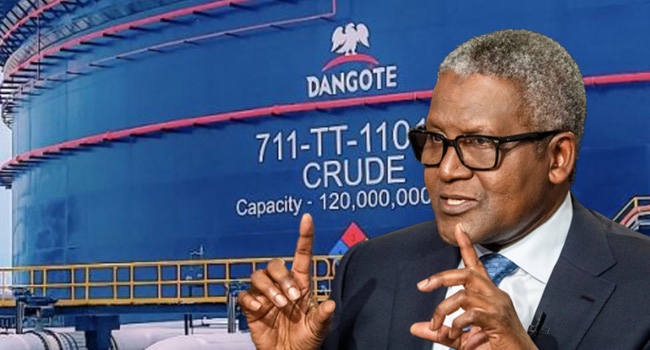
Business mogul, Aliko Dangote has expressed concern over the continued smuggling of petrol from Nigeria to neighbouring countries, warning that the practice threatens domestic fuel supply despite the country’s growing refining capacity.
Dangote, speaking on operations at the Dangote Petroleum Refinery, highlighted the large price differential between Nigeria and neighbouring states as a major incentive for diversion. He noted that Nigerian petrol, being significantly cheaper, creates a lucrative opportunity for smugglers, undermining local distribution and affecting market stability.
The industrialist emphasized that even with the operationalization of local refineries, including his own, smuggling is likely to persist unless systemic measures are implemented to address the profit motive behind cross-border diversion.
He argued that border enforcement alone may not suffice to curb the illegal trade.
The allegations sparked a strong response from the Depot and Petroleum Products Marketers Association of Nigeria (DAPPMAN), which rejected claims that its members were involved in fuel smuggling.
The group demanded that Dangote provide verifiable evidence of the alleged diversion within seven days or retract the statement, warning of potential legal action.
DAPPMAN also argued that only regulatory authorities, such as the Nigerian Customs Service (NCS) or the Nigerian Midstream and Downstream Petroleum Regulatory Authority (NMDPRA), have the mandate to investigate smuggling activities.
Petrol smuggling has long been a concern in Nigeria, with previous reports indicating that subsidized fuel is often diverted to neighbouring West African countries where it commands higher prices.
The practice not only affects domestic supply but also erodes government revenue and distorts market fairness.
The current dispute between Dangote and industry marketers underscores deeper structural tensions within Nigeria’s petroleum sector, highlighting the need for coordinated regulatory oversight, enforcement, and collaboration between producers and marketers to ensure fuel stability.
Observers note that if the allegations are substantiated and smuggling is curtailed, it could lead to improved domestic supply, reduced shortages, and a more stable downstream petroleum market in Nigeria.