
Army Suspends Officer Retirements Over Nationwide Security Emergency
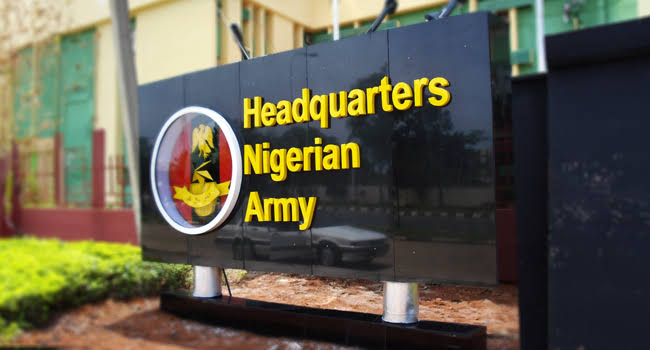
The Nigerian Army has placed an immediate and indefinite suspension on both statutory and voluntary retirements for selected categories of officers, a decision taken as the military intensifies efforts to stabilise the country following President Bola Ahmed Tinubu’s declaration of a nationwide security emergency.
The directive, issued through an internal communication from the Military Secretary’s office on behalf of the Chief of Army Staff, Lt.-Gen. Waidi Shaibu, is aimed at preventing a drop in experienced manpower at a time when the Armed Forces are overstretched by concurrent operations across the country.
Sources familiar with the development explain that the suspension does not apply to all personnel but targets specialised and leadership cadres whose departure would create operational gaps.
The decision comes as the Federal Government rolls out sweeping security interventions, including accelerated recruitment drives for the Army, Air Force, Navy, police and other paramilitary agencies. The plan also includes enhanced intelligence coordination, expanded deployments to vulnerable communities, and intensified counterterrorism operations in the North-East, North-West and North-Central regions.
Security insiders say the suspension of officer exits is part of a broader strategy to retain institutional memory and ensure operational continuity.
Many of the affected officers occupy roles that require advanced training, years of battlefield experience, or command responsibilities that cannot be immediately filled by junior personnel.
By holding back retirements, the Army aims to stabilise leadership structures while reinforcing active theatres of operation.
The move has prompted discussions within defence circles about long-term reforms, including a potential review of retirement policies, the possibility of recalling recently retired officers, and the need to expand training pipelines for new recruits.
Analysts note that while boosting troop numbers is vital, the success of the emergency response will also depend on addressing long-standing issues such as logistics efficiency, troop welfare, equipment gaps and community-level intelligence gathering.
Civil society groups and legal experts are expected to closely observe how the temporary freeze aligns with existing military service laws, though officials suggest the measure is strictly tied to the security emergency and may be lifted once stability improves.