


Supreme Court Declines Osun Government’s Suit, Faults FG Over Withheld LG Allocations
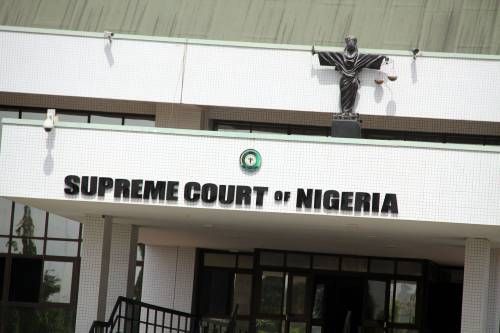
The Supreme Court of Nigeria has dismissed a legal action instituted by the Osun State Attorney General, Oluwole Jimi-Bada, against the Attorney General of the Federation (AGF), Lateef Fagbemi, in the ongoing dispute over withheld allocations meant for the state’s 30 local government councils.
In a split judgment delivered by a panel of seven justices, the apex court ruled by a majority of six to one that the Osun Attorney General lacked the legal capacity to file the suit on behalf of the local governments.
The court held that only elected and inaugurated council officials possess the constitutional right to initiate such proceedings.
Reading the lead judgment, Justice Mohammed Idris criticized the Federal Government’s decision to withhold the funds, describing the action as a violation of the 1999 Constitution.
He affirmed that local government allocations must be released directly to the designated local accounts, stressing that the Federal Government acted outside the law.
The court further dismissed the contempt allegations raised by the AGF against Osun State, stating that the Federal Government, by failing to disburse the funds as required, bore greater responsibility for non-compliance.
Despite acknowledging that the Federal Government erred in withholding the allocations, Justice Idris maintained that the suit could not stand since there was no evidence that the Osun Attorney General had been authorised by the local councils to pursue the matter on their behalf. He ruled that without this mandate, the state’s top law officer had no proper legal footing to represent them.
However, in his dissenting opinion, Justice Emmanuel Agim disagreed with the majority’s position. He insisted that the Osun Attorney General was within his constitutional rights to file the action and warned that the Federal Government’s refusal to release the allocations could hinder the effective functioning of local administrations. Agim described the Federal Government’s conduct as detrimental and capable of incapacitating the councils.
The decision underscores ongoing tensions over fiscal autonomy for local governments and highlights unresolved questions surrounding who is empowered to seek redress when federal–state financial disputes arise.