

Shoot Terrorists on Sight, Don’t Wait for Orders, Defence Minister, General Musa Directs Troops
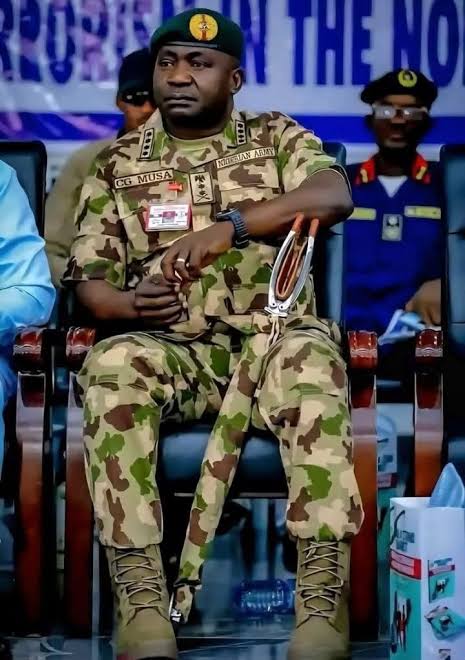
In a bold and decisive move, newly appointed Defence Minister Christopher Musa has ordered frontline troops to immediately engage armed bandits and insurgents on sight, without waiting for further orders.
The announcement came as the nation grapples with surging insecurity across multiple fronts.
Musa explained that the directive is necessary to safeguard troops operating in hostile zones and to rebuild public trust in the country’s security system.
He stressed that once soldiers are deployed to a conflict area, they carry the automatic mandate to neutralise any armed criminals posing imminent danger.
“You are to engage any criminal or any bandit that is armed and about to kill you. You don’t have to wait,” he declared.
He warned against soldiers claiming they were waiting for additional orders when confronted with imminent danger, calling such hesitation “cowardice.”
According to Musa, every deployed operative is briefed in advance and equipped with the authority and responsibility to act.
In addition to the shoot‑on‑sight order, Musa revealed a reorganisation of deployment strategy: regular road checkpoints currently manned by the military will henceforth be handled by the Nigeria Police Force and the Nigeria Security and Civil Defence Corps. This shift is intended to free up military personnel for intensive operations in forests, remote terrain, and known insurgent hideouts.
The Minister argued that this realignment will enable the Armed Forces to focus entirely on confronting terrorists and bandits wherever they are hiding.
He added that restoring safety for vulnerable communities — including farmers who have abandoned their farms due to fear of attacks — is among his top priorities.
Musa’s remarks come amid mounting public frustration over repeated attacks, kidnappings, and killings in many states. During his address, he reiterated his commitment to a zero‑tolerance policy: “There will be no negotiation with terrorists or criminals,” he vowed.
The newly confirmed Defence Chief accepted that expectations on his leadership are high. He acknowledged that the country has witnessed serious security failures, including recent mass abductions and killings targeting both civilians and military officers — and pledged to investigate the incidents thoroughly.
Analysts and security watchers have reacted with cautious optimism: while some believe the aggressive posture signals seriousness and may deter criminals, others warn that such orders must be accompanied by strict safeguards to prevent misuse or collateral damage.
The balance between firm action and respect for human rights remains a critical point of debate.
As Nigeria stands at a critical juncture, the coming weeks will show whether Musa’s directive will translate into improved security on the ground — or deepen concerns over rules of engagement and accountability in conflict zones.